Why does Iowa have the largest share of homes above the radon action level?
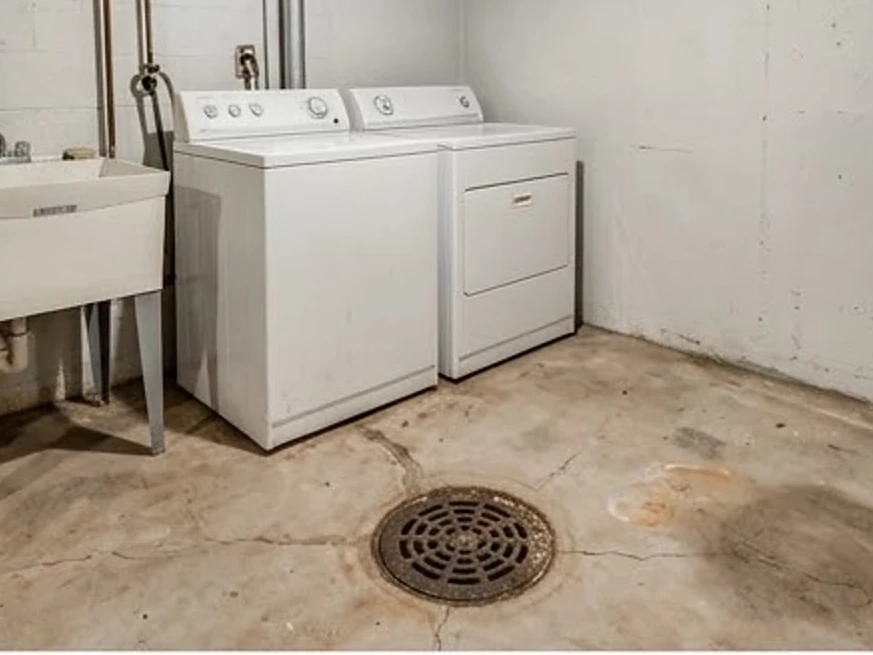
Iowa has the largest percentage of homes above the EPA radon action level of any state because of its glacial geology. Repeated ice sheets ground uranium-bearing rock into the fine, mineral-rich glacial deposits that now blanket the state, and as trace uranium in that soil decays, it produces radon gas continuously, right beneath Iowa's homes. Iowa HHS reports that 71.6 percent of Iowa homes test above the EPA action level of 4.0 picocuries per liter in the Iowa Radon Survey, the largest percentage of any state. The gas enters through the paths every basement provides: sump pits, floor drains, cracks in slabs, gaps around plumbing penetrations, and porous block walls. Modern, tightly sealed homes can actually concentrate radon because they exchange less air, and winter makes it worse, since closed windows and the stack effect of a heated house pull soil gases upward. None of this is detectable by sight or smell, and neighboring houses on the same street can test wildly differently, so the county map tells you nothing about your specific address. The only way to know is to test, which is why we recommend radon measurement on essentially every Iowa inspection, from Des Moines to the smallest farm town. The good news: mitigation systems reliably bring even severe levels down, so a high test is a solvable problem, not a reason to walk away from a house.
In Minnesota and Iowa homes

Build your quote in 30 seconds.
No phone tag, no callback delay. Price and book your inspection right here — it takes about 30 seconds and there is no obligation.