Do I need a home inspection on a condo?
Yes. The common advice that the association handles everything is wrong in two directions. Everything inboard of your unit's boundary — furnace or air handler, water heater, panel and branch circuits, supply and drain plumbing, fixtures, windows, doors, appliances and finishes — is yours to repair and is exactly what a standard inspection covers. And the parts the association maintains still get paid for by owners, through dues or a special assessment. Knowing the physical condition of both is the entire point.
What does a condo inspection actually include?
Your unit and its systems: heating and cooling equipment and controls, the electrical panel and receptacles, supply and drain plumbing, the water heater and its safety valve, unit-level shutoffs, ventilation and dryer venting, windows and doors, interior finishes, and appliances. We pay particular attention to evidence of past water entry — ceiling staining in a top-floor or lower-stacked unit, cabinet bases, the laundry hookups and the water heater. Common areas get documented as observations outside the required scope.
Does a condo inspection cover the roof?
Not as part of the required scope. InterNACHI's condominium scope clause states the inspector inspects only the unit, and that components which are not the seller's property — naming the roof of a condominium or townhouse, exterior stairs, railings, pools, stucco, decks and common-area items — are not inspected. ASHI's standard likewise excludes common elements in multi-unit housing. We will still note what is visible from the ground and from your unit as a courtesy, and then point you to the association's reserve study for the roof's age and funded replacement date. That is the correct division of labor.
Why will the inspector not inspect the common areas?
Because they are not the seller's property and not what you are buying, and the standards of practice say so explicitly. It is a scope limit, not evasion. What we do instead is document visible condition as courtesy observations — staining, deteriorated balcony guards, failing sealant, settled walks, work already underway on the exterior — and tell you which association documents will answer the question the observation raises. An inspector reports condition; the governing documents and the reserve study assign the bill.
What is the difference between a common element and a limited common element?
A common element is everything outside the units that the whole association shares — roofs, structure, hallways, grounds, lobbies. A limited common element is a portion of the common elements reserved for the exclusive use of one unit or a few units: typically balconies, patios, assigned parking, assigned storage, and often the unit's exterior door, windows and the HVAC condenser pad. It is not yours outright. You have exclusive use of something the association still owns.
Who is responsible for repairing my balcony or patio, me or the association?
The default is the association — except to the extent the declaration shifts that duty to the unit owner, which declarations frequently do. That exception is the whole answer. Only your building's declaration and bylaws decide which regime applies to your specific balcony, patio, window or condenser pad. What we can tell you is its physical condition, and a deteriorated guard or a rotted deck ledger is a life-safety finding you need either way, because it is coming out of the reserve fund or your own pocket.
Do I need an inspection on a townhouse?
Yes, and step one is determining which regime the property is under, because it changes the scope. Many townhomes are fee-simple, with the owner responsible for the roof, siding, foundation and grounds — in which case the inspection is essentially a single-family inspection with a party wall. Others are condominium-form, where the exterior is an association responsibility. Buyers routinely assume the wrong one. We confirm what is physically there and you confirm the legal regime from the documents.
How much does a condo inspection cost compared to a house?
Scope drives it. A unit in a stacked building with no roof, no foundation and no exterior in scope is a narrower inspection than a house; a fee-simple townhome where you own the roof and the exterior is closer to a full home inspection. Add-ons such as radon testing on a ground-contact unit change it again. Submit the address and unit through the free instant quote request and we will send you a figure for that specific property.
Should I get a radon test in a condo, and does it matter if I am on the third floor?
Yes for any unit with ground contact — a ground-floor or walkout unit, a townhome over a basement or slab, anything over a crawlspace. Iowa is designated by EPA as entirely Zone 1, and Iowa HHS reports the Iowa Radon Survey found the state has the nation's largest percentage of homes above the 4 pCi/L action level, 71.6 percent. Upper-floor risk is lower but not automatically zero: radon migrates through elevator shafts, stairwells and plumbing chases, and winter stack effect pulls it up those same pathways. The multifamily measurement standard reflects this, calling for 100 percent of ground-contact units plus 10 percent of upper-floor units.
If a condo tests high for radon, can I just have it mitigated?
Typically not on your own. A mitigation system penetrates the slab and routes a vent stack through common elements and usually the roof, so in almost every association it requires board approval before installation. This is worth knowing before you test, not after: a high result in a condo is a conversation with the association, not a unilateral repair. It is also a question worth asking during the document review — some associations have already addressed it building-wide.
What HOA documents should I review before buying a condo?
Start with the declaration and plat, which establish your unit boundary and the limited common element assignments. Then the reserve study and current reserve balance measured against the big-ticket items coming due — roof, siding, elevators, parking deck, boiler. Then special assessment history and anything pending or under discussion, board minutes for the last year or two, the master insurance policy and what your own HO-6 walls-in policy must cover, and any litigation, rental caps or owner-occupancy ratios, which can affect your own financing. A real estate attorney should review the declaration.
What is a special assessment, and can an inspection predict one?
A special assessment is a one-time charge levied on owners when the association needs money the reserve fund does not have — most often for a roof, siding, balconies, a parking deck or an elevator. An inspection cannot read the association's books, and we will not pretend otherwise. What it can do is document the physical condition that predicts one: an aging roof, failing sealant and flashing, deteriorated balconies or guards, settled walks, and exterior work visibly underway. Condition plus the reserve study is how you see an assessment coming.
Who pays if a pipe leaks from the unit above mine?
It depends on where the failure originated and how your declaration and the master policy divide the loss. Generally the vertical stacks and risers are common elements while the branch lines inside a unit are the owner's, and the master policy and your own HO-6 walls-in policy split the damage along that same boundary. What we inspect is the physical side: prior leakage staining at ceilings, the presence and accessibility of unit-level shutoffs, laundry hookups, and whether the water heater sits in a pan with a functioning drain.
What does a condo or townhome association actually control inside my unit?
More than most buyers expect, and the HVAC configuration is where it shows. If the building runs a central boiler or chiller owned by the association and your unit has only fan coils, baseboard or radiators, you do not control your own heat and the association controls the seasonal changeover. Many associations also set rules on water heater age, washing machine hose replacement, flooring assemblies and alterations to limited common elements. Iowa's common interest communities are governed under Minn. Stat. ch. 515B and Iowa condominiums under Iowa Code ch. 499B — but your own declaration is what binds your unit.
Why would a brand-new Tiffin house need an inspection at all?
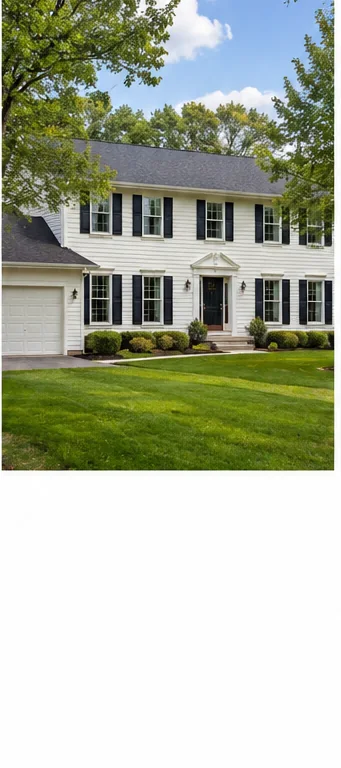
Because new does not mean finished correctly. Tiffin went from 975 residents in 2000 to 4,512 in 2020 and an estimated 6,695 by 2024, the fastest growth anywhere in this region, and its 2020 vacancy rate of 11.6 percent reflects how much was still being built. Fast-built housing produces a consistent set of defects: missing or reversed flashing, HVAC ductwork never balanced, attic bypasses left open above insulation, and final grading that slopes toward the foundation. We inspect at the pre-drywall stage, at closing, and before the warranty year runs out.
 Tiffin