
Foundation Inspection in Glenwood
Foundation Inspection in Glenwood, IA by Closer Look Inspectors. A photo-mapped digital report within 24 hours.
Foundation Inspection in Glenwood
Foundation Inspection in Glenwood, Mills County, by Closer Look Inspectors. Glenwood is the Mills County seat, founded by Mormon settlers in 1848 as Coonsville, made county seat in 1851, renamed Glenwood in 1852 and reached by the Burlington and Missouri River Railroad in 1869, and we calibrate every visit to that.
A foundation inspection reads a home's structure — poured concrete, block and the grading around it — for cracking, movement, settlement and water entry, so you know whether a crack is cosmetic or a genuine budget line.
Glenwood homes are inspected by a local partner in our Iowa network. · Call or text (563) 517-7815
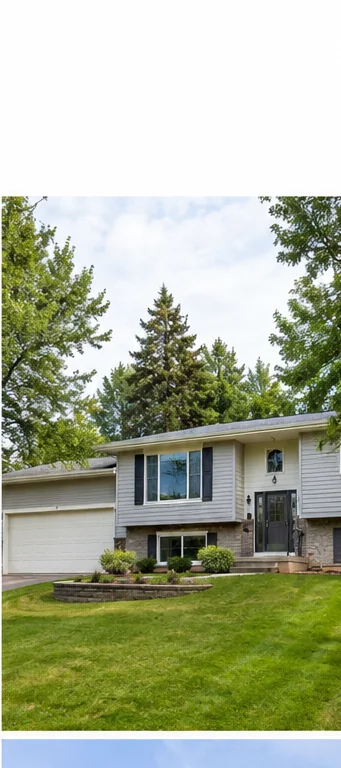 Glenwood
Tuned to Glenwood.
Glenwood housing runs to houses from the 1850s county-seat settlement and the railroad decades after 1869, a postwar stock from the years when the town was a meatpacking center, and newer development up to the 2000 peak of 5,358 residents, across the downtown square and older residential streets, the Keg Creek corridor, and the neighborhoods around Glenwood Lake Park, on loess-mantled hills of the Loess Hills on the east side of the Missouri River, with Keg Creek running through the area — and that mix shapes what a foundation inspection here needs to find. Instrument-grade tools, a local eye, every visit.
Local conditions in Glenwood
No Iowa law requires a home inspection before a sale — the one mandatory time-of-transfer inspection covers private septic systems (Iowa Code 455B.172) — which makes an independent inspection the only thorough, buyer-side read on a Glenwood home. Glenwood sits in Mills County, and every Iowa county is EPA Radon Zone 1. Iowa HHS reports Iowa has the largest percentage of homes above the 4.0 pCi/L action level of any state — 71.6 percent in the Iowa Radon Survey — and the Iowa seller disclosure form asks for any known radon test results. Finished basements concentrate it, and only a 48-hour test gives you this home's number. Iowa leaves frost depth to the local building code rather than one statewide number, and the annual freeze-thaw cycle drives the settlement cracks and ice-dam wear we calibrate every Glenwood visit to find.
Common questions.
Are foundation cracks always serious?
What is common in Iowa foundations?
Glenwood is a county seat with homes from the 1850s onward. What should I expect from the older houses?
More across Iowa.
Foundation Inspection nearby
- Foundation Inspection in Pacific Junction · Mills County
- Foundation Inspection in Silver City · Mills County
- Foundation Inspection in Malvern · Mills County
- Foundation Inspection in Tabor · Fremont County
- Foundation Inspection in Hastings · Mills County
- Foundation Inspection in Council Bluffs · Pottawattamie County
Questions about foundation inspection
Build your quote in 30 seconds.
No phone tag, no callback delay. Price and book your inspection right here — it takes about 30 seconds and there is no obligation.