
By the Closer Look Inspectors team · Facts checked October 2026 against the sources listed below · About our inspectors
A commercial property inspection documents the condition of an office, retail, warehouse, church, or apartment building so buyers, tenants, and owners can plan repairs and capital spending. It is a different job from a home inspection, built for larger systems and bigger decisions.
Get Your Free Instant QuoteCall or text (612) 457-1634
Commercial buildings we inspect

On this page
What a commercial property inspection isHow it differs from a home inspectionWho orders one, and whyTiming inside a purchaseThe building typesWhere thermal imaging adds valueTalk through a specific buildingBuilding typesTowns we coverQuick answersWhat a commercial property inspection is
A commercial property inspection records the physical condition of a non-residential building or a large apartment building, so the person making the decision can see what they are getting before money changes hands.
ASTM E2018-24, the current edition of the Standard Guide for Property Condition Assessments: Baseline Property Condition Assessment Process, describes a baseline process built on a walk-through survey, supported by research, owner-provided documentation, and interviews. Its stated goal is to identify and communicate material physical deficiencies to the person who asked for the work.
The guide calls the finished product a property condition report. It is voluntary, and it is plain about limits: a user should only rely on the report for the point in time the observations and research were conducted, and no assessment can wholly eliminate the uncertainty about whether physical deficiencies are present.
How it differs from a home inspection
Home inspection standards are written for residential properties. InterNACHI's, for example, describe a home inspection as a non-invasive, visual examination of the accessible areas of a residential property, and apply to properties with four or fewer residential units.
Commercial buildings change the questions. Roofs are larger and often low-slope. Heating, cooling, and electrical systems are bigger and more varied. And the reader is often deciding about a purchase, a lease, or a multi-year repair budget rather than a move-in date.
ASTM's baseline guide says not every property warrants the same level of assessment. It says the right level is guided by the purpose the assessment serves, the type of property, the age of the improvements, the user's expertise and risk tolerance, and the time available. For a property with several buildings, it intends all of the primary improvements to be discussed in one report.
Who orders one, and why
Buyers order one to learn what they are inheriting. The guide expects the person who ordered the work to weigh the purpose it serves and their own risk tolerance, which is why two buyers of similar buildings can ask for different depth.
Tenants on triple-net leases order them because the lease moves upkeep onto the tenant. Cornell's Legal Information Institute explains that under a triple net lease the tenant pays rent plus property taxes, insurance, and common-area maintenance charges, and sometimes utilities or repairs, and adds that a tenant may have to cover unforeseen maintenance costs.
Owners order them to plan capital work. A documented list of conditions gives a landlord, a board, or a church council something concrete to schedule against. In its guidance on maintaining historic building exteriors, the National Park Service notes that deterioration can accelerate when the building envelope is not maintained on a regular basis, and that stopping decay before it is widespread helps keep the scale and complexity of work manageable for the owner.
Timing inside a purchase
In a purchase, the assessment has to fit the buyer's investigation window, however the contract defines it. Access, a point of contact, and records have to be lined up, and the guide lists a point of contact and access among the responsibilities it assigns to the person who ordered the work.
The guide also treats timing as part of scope. It warns that chasing ever more information can become "a material detriment to the orderly and timely completion of a commercial real estate transaction."
If a lender is involved, ask what kind of condition report it accepts before the inspection is scheduled.
The building types
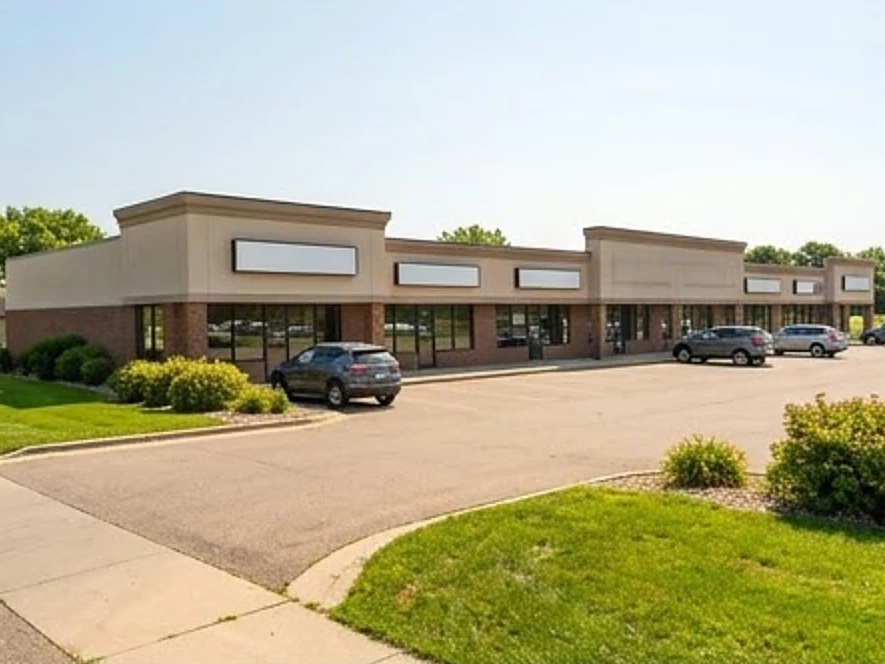
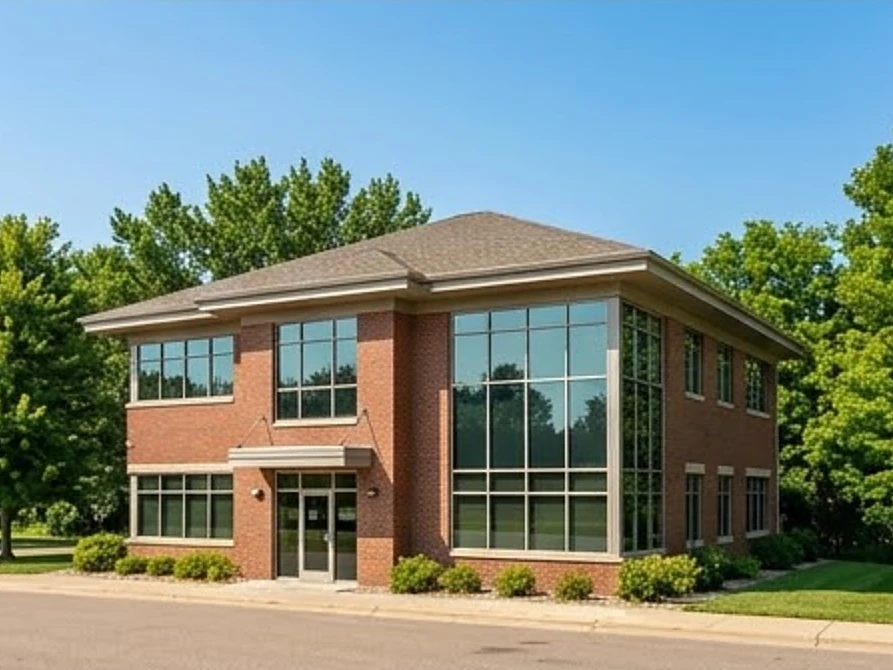
For retail, office, and mixed-use buildings, the common thread is shared roofs and walls: storefronts, strip centers, small office buildings, and main-street blocks with apartments upstairs put several occupants under one structure. In the U.S. Energy Information Administration's national survey of commercial buildings (the 2018 Commercial Buildings Energy Consumption Survey), the median office building was 38 years old and the median non-mall retail building 43. The same survey puts the median commercial building of any type in the West North Central division, which includes Minnesota and Iowa, at 34 years.
Warehouses, pole and steel shop buildings, light industrial space, and flex space are mostly large roofs, long spans, and slab floors, with electrical and heating systems sized for the work inside. The same 2018 survey estimated 1,004 thousand warehouse and storage buildings nationwide, against 970 thousand office buildings.
Apartment buildings with five or more units are their own category: Fannie Mae's and Freddie Mac's multifamily guides both start at five dwelling units, while InterNACHI's home inspection standards cover properties with four or fewer residential units.
For churches and community buildings, use varies widely. The same 2018 national survey puts the median place of worship at 45 years old and open 15 hours a week, against 36 years and 50 hours for commercial buildings overall, and the median public assembly building, such as a community hall, at 43 years and 45 hours.
Where thermal imaging adds value
Thermal imaging suits problems that hide and show up as a temperature difference. The U.S. Department of Energy's maintenance guide gives examples: a loose or corroded electrical connection runs hot because of increased resistance, moisture in a flat roof appears as a different thermal profile, and rotating equipment under friction warms. Missing or inadequate insulation in a building envelope can be detected too.
The commercial thermal imaging page covers four areas: electrical panels and switchgear, flat roofs, building envelopes, and mechanical equipment.
Talk through a specific building
Closer Look Inspectors provides commercial property inspections and commercial thermal imaging in Minnesota and Iowa. Describe the building and request a quote.
Building types
Commercial inspection near you
Quick answers
Is a commercial property inspection the same as a home inspection?
No. Home inspection standards, such as InterNACHI's, are written for properties with four or fewer residential units. Commercial buildings have larger, more varied systems and more people relying on the findings.
What is the ASTM property condition assessment guide?
A voluntary ASTM guide that sets a baseline process for assessing commercial real estate: a walk-through survey, research, documentation, and interviews, with the findings communicated in a property condition report. The current edition carries a 2024 designation.
Who typically orders a commercial property inspection?
Buyers who want to know what they are inheriting, tenants on triple-net leases who will pay for maintenance, and owners planning capital work. The purpose sets the scope.
When should the inspection happen in a purchase?
Early in the buyer's investigation window, because access, records, and interviews have to be lined up.
Where does a home inspection end and a commercial inspection begin for apartments?
At five units. InterNACHI's home inspection standards apply to properties with four or fewer residential units, so a building with five or more units falls outside them.
How old is the typical commercial building in the region that includes Minnesota and Iowa?
In EIA's 2018 national survey, the median commercial building in the West North Central division, which includes Minnesota and Iowa, was 34 years old, against 36 years for the nation. A median is a midpoint, so half are older.
Sources
- ASTM International: Standard Guide for Property Condition Assessments: Baseline Property Condition Assessment Process (current edition)
- InterNACHI: Home Inspection Standards of Practice
- Cornell Law School Legal Information Institute: Net lease (Wex)
- Cornell Law School Legal Information Institute: Triple net lease (Wex)
- National Park Service: Preservation Brief 47, Maintaining the Exteriors of Small and Medium Size Historic Buildings
- U.S. Energy Information Administration: 2018 CBECS Table B2, Summary table: total and medians of floorspace, number of workers, and hours of operation
- U.S. Energy Information Administration: CBECS terminology
- Fannie Mae Multifamily Guide: Part II, Chapter 1, Eligible Properties
- Freddie Mac Multifamily Seller/Servicer Guide: Glossary
- U.S. Energy Information Administration: CBECS building type definitions
- U.S. Department of Energy (PNNL): Operations & Maintenance: A Guide to Achieving Operational Efficiency, Release 3.0 (August 2010), Chapter 6, Predictive Maintenance Technologies
Buying, leasing or financing a commercial building? Build a free instant quote, or call or text (612) 457-1634.
Get Your Free Instant Quote