If you own a home in the Twin Cities or anywhere in Minnesota, radon is one of the few hazards that is both invisible and genuinely common here. Minnesota sits on glacial soils that readily produce and move radon gas, and the way we build and live with our homes, in century-old Saint Paul neighborhoods, in newer suburban subdivisions, and out on the rural well-and-septic edges of greater Minnesota, all shape how much of it ends up in your living space. This guide explains what radon actually is, why Minnesota tests so high, how local conditions from clay-soil basements to winter ice dams interact with it, and what a Minnesota homeowner can do about it without panic or guesswork.
In this guide
Why Minnesota reads so highOlder urban homes, moisture, and the stack effectNew subdivisions and radon-resistant constructionGreater Minnesota: wells, septic, and radon in waterHow winter, ice dams, and a closed-up house raise your numbersTesting right and fixing it: what to actually doWhy Minnesota reads so high
Radon is a naturally occurring radioactive gas produced as uranium in soil and rock breaks down. You cannot see, smell, or taste it, and over years of exposure it is the second-leading cause of lung cancer in the country. Minnesota as a whole runs high; the state estimates roughly 40 percent of homes test at or above the action level. The reason is geology: the glaciers that shaped the Twin Cities and the surrounding moraines left behind deep, uranium-bearing till and gravel. That soil constantly generates radon, and the gas follows the path of least resistance, which is very often the foundation of your home. Because indoor radon is driven by what is under the slab rather than by neighborhood reputation or home age, a brand-new build in a Dakota County subdivision and a 1920s farmhouse out in greater Minnesota can both test well above the action level. The Minnesota Department of Health recommends mitigation at or above 4.0 pCi/L, and a large share of homes that get tested land at or over that line. The single most important takeaway is that radon risk here is the rule, not the exception, and the only way to know your number is to test the specific house you live in.
Older urban homes, moisture, and the stack effect
The century-old homes of Saint Paul and Minneapolis face a particular combination of factors. Many of these properties were built on sloping or bluff lots, sometimes with walkout or daylight basements, and over decades of additions, foundation repairs, and remodeling the soil contact under the home has been disturbed and re-disturbed. Every crack, plumbing penetration, sump pit, and gap where the slab meets the foundation wall is a potential entry point for soil gas. Older urban homes also fight chronic moisture, and the same conditions that pull damp air into a basement also pull radon. In winter, the stack effect is the key driver: warm air rises and escapes the upper floors, the house pulls makeup air from below, and that low-pressure zone literally draws soil gas and radon up through the foundation. Homes with finished lower levels used as bedrooms or family rooms are the ones to watch most closely, because that is exactly where people spend long stretches of time. If you have a damp basement smell, efflorescence on the walls, or a sump that runs often, treat those as flags that air and gas are moving freely between the soil and your living space, and test accordingly.
New subdivisions and radon-resistant construction
Much of the metro's recent growth has come in newer subdivisions on the suburban edges, and there is good news and a caveat here. Minnesota's building code has, for years, required passive radon-resistant construction in new homes: a layer of gas-permeable material under the slab, a sealed vapor barrier, and a capped vent pipe routed from beneath the foundation up through the roofline. If your home was built under that code, look for that white PVC pipe, often labeled, running through a closet or mechanical room. The caveat is that a passive system is not a guarantee. It is designed to be easily upgraded, not to fix the problem on its own, and many newer homes still test above 4.0 pCi/L even with the rough-in in place. The passive pipe relies on natural air movement, which is weakest in exactly the cold, closed-up months when radon levels peak. The fix is usually straightforward: a qualified contractor adds an inline fan to turn the passive stub into an active sub-slab depressurization system. So if you bought a newer build and assumed the radon question was handled at construction, confirm it with a real test rather than the presence of a pipe.
Greater Minnesota: wells, septic, and radon in water
Out past the suburbs, in the rural townships and small towns of greater Minnesota, many homes run on private wells and septic systems, and that adds a second radon pathway most homeowners never consider. Radon dissolves into groundwater, and water drawn from a drilled well can carry it indoors. Every time you shower, run the dishwasher, or do laundry, agitated water releases some of that radon into the air. Waterborne radon is usually a smaller contributor than soil gas coming up through the slab, but on a rural well it is worth ruling out, especially if your air test comes back high and the cause is not obvious. A separate water radon test answers that question. Rural homes also tend to have older block foundations, unfinished or partially finished basements, crawl spaces, and field stone in the oldest farmhouses, all of which offer more entry points and less of a sealed barrier than a modern poured slab. The septic side does not produce radon, but the same loose, gas-permeable soils that drain a septic field well also let radon migrate freely. If you are on well and septic, treat radon testing as part of the same routine maintenance mindset you already apply to water quality and tank pumping.
How winter, ice dams, and a closed-up house raise your numbers
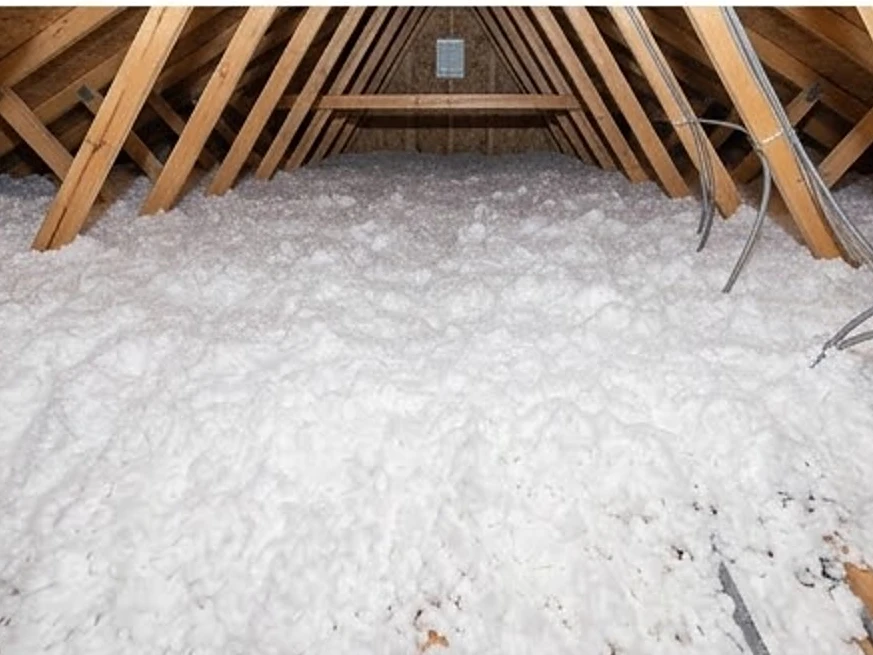
Radon in Minnesota is seasonal, and our winters push it to its highest readings of the year. From roughly late fall through early spring, your home is sealed tight, the furnace runs constantly, and that strong stack effect pulls soil gas upward with real force. Frozen, snow-covered ground around the foundation acts like a cap, blocking radon from venting harmlessly to the outdoors and steering more of it toward the warm, lower-pressure interior of your house. This is also ice dam season, and while ice dams are a roof and insulation problem rather than a radon problem directly, they point to the same underlying issue: air leaking out the top of the house. Heat escaping into the attic that melts snow into ice dams is the same upward air movement that drives radon up from below. Homes with finished basements, attached garages, and tight modern envelopes can concentrate radon further. The practical lesson is about timing: a short-term radon test done in July on an open house with the windows cracked can badly underestimate your real winter exposure. For an honest picture, test during the heating season with the house in normal closed conditions, or use a long-term test that averages across months.
Testing right and fixing it: what to actually do
Testing is cheap, simple, and the only way to know your number. You have two honest options. A short-term test, a charcoal kit or electronic monitor left in the lowest lived-in level for a few days under closed-house conditions, gives a fast snapshot and is what is typically used during a real estate transaction. A long-term test, sitting for ninety days or more, gives a truer year-round average and smooths out the seasonal swings described above. Place the device in the lowest level you actually use, keep it away from drafts, exterior walls, and sump pits, and follow the closed-house instructions. If your result is 4.0 pCi/L or higher, the recommendation is to mitigate; many homeowners choose to act in the 2 to 4 range as well, since no level is risk-free. The standard fix is active sub-slab depressurization: a contractor cores the slab, installs a suction pit and pipe, and runs a continuous fan that pulls radon from under the foundation and vents it above the roofline before it ever enters your air. A properly installed system reliably drops most homes well below the action level, runs quietly for years on a few dollars of electricity a month, and should always be confirmed with a follow-up test. Use a Minnesota-licensed radon professional and keep your paperwork; future buyers will ask.
Quick checklist
- Test the home you live in, not the neighbor's, since radon depends on the soil under your specific foundation
- Run the test during the heating season under closed-house conditions, or use a long-term test for a true year-round average
- Place the device in the lowest level you actually use, away from drafts, sump pits, and exterior walls
- On newer subdivision homes, find the passive radon vent pipe but confirm with a real test, since the pipe alone does not guarantee a safe level
- On older homes, watch finished lower-level bedrooms and family rooms and treat damp basement signs as a reason to test
- If you are on a private well in greater Minnesota, consider a separate water radon test when your air result is high and the cause is unclear
- Mitigate at 4.0 pCi/L or above, and seriously weigh action in the 2 to 4 range since no level is fully safe
- Hire a Minnesota-licensed radon professional and always re-test after a mitigation system is installed
- Keep your test results and mitigation paperwork on file for future buyers and your own records
Radon is invisible, common across Minnesota, and completely fixable once you know your number, so do not guess about the air in your home. If you are buying, selling, or simply want peace of mind, we can help you test correctly and understand exactly what your results mean for your house and foundation. Call us today to talk through your situation, or use the free instant quote tool below in just a couple of minutes and get your inspection on the calendar.
Get Your Free Instant Quote