
Home inspection in Minneapolis.
Closer Look Inspectors provides home inspection in Minneapolis, Hennepin County. Every Minneapolis inspection is documented in a photo-mapped digital report within 24 hours.
Why Minneapolis homes need a local read.
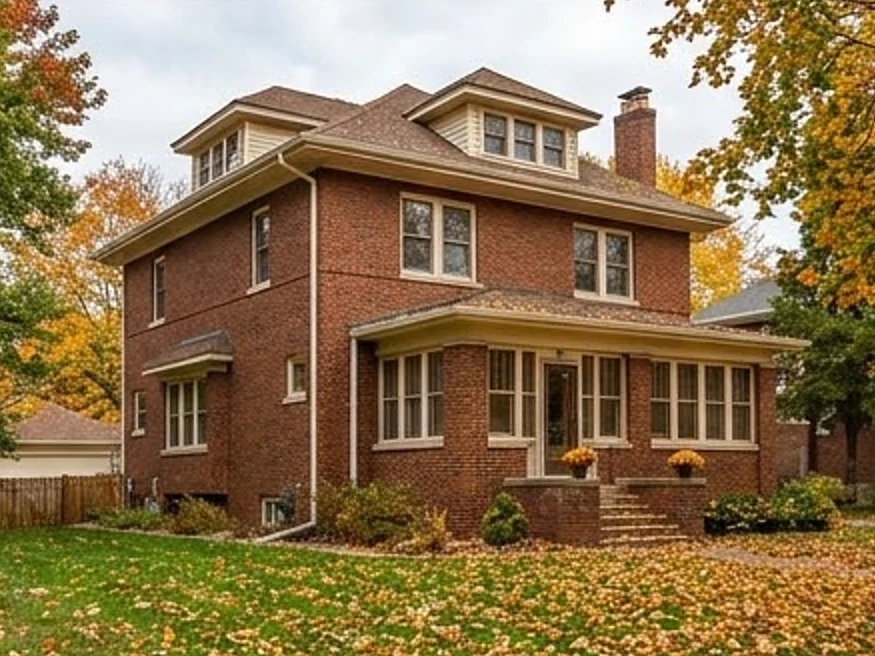
Minneapolis is a lake-and-river city of bungalows, four-squares and dense newer infill across its many neighborhoods.
Minneapolis housing runs to bungalows, four-squares and dense newer infill, across the chain-of-lakes neighborhoods, the river corridor, and the redeveloping commercial edges, on lake-adjacent and urban clay sites.
See every Hennepin County city we serve →
Commercial property inspection in Minneapolis →
Questions about a Minneapolis home? · Call or text (612) 457-1634
What we see in Minneapolis homes.
Minneapolis was incorporated as a city in 1867 and merged with St. Anthony in 1872, and its housing shows that long history. The city covers 57.51 square miles, has 13 lakes within its limits, and sits on both banks of the Mississippi River, and it officially includes 83 neighborhoods in 11 communities. Longfellow was, per Wikipedia, largely built from 1906 through the 1920s once streetcars arrived, and it is known for Craftsman bungalows. Northeast has modest Victorians and small apartment buildings from its immigrant mill-worker days. Nokomis surrounds Lake Nokomis, Southwest surrounds Lake Harriet, and North Minneapolis is made up of the Camden and Near North communities.
A house here can be a century old and still be sound, but only if its systems were kept up. In Longfellow and similar bungalow areas, original sewer laterals, foundations with old rubble or block walls, plaster and lath ceilings, undersized or altered electrical service, and roofs and dormers with limited attic ventilation are the common concerns. Older houses that were updated in pieces often hide mixed wiring, mismatched plumbing and additions that were built without much insulation. Houses close to Minnehaha Creek, the lakes and the river gorge get extra scrutiny for grading, sump pump discharge and basement moisture. Denser infill and newer townhomes bring their own list, such as flashing, decks and balconies, and siding transitions.
Minneapolis also has a Truth in Sale of Housing program, and it affects how buyers should think about inspections. The city requires a TISH evaluation by a city-licensed evaluator before a house, duplex, townhouse or first-time condominium conversion is shown. The report covers the building inside and outside, lists required repairs, and is valid for two years or one sale, according to the city website. If repairs are still open at closing, the buyer signs an acknowledgment and has 90 days to complete them. It is a seller's disclosure tied to city standards, not a substitute for your own inspection.
Your inspection covers what the TISH checklist does not. The age and remaining life of the roof, furnace and water heater matter, as does how the house handles water, which counts in older neighborhoods near lakes and creeks. Hennepin County is in EPA Radon Zone 1, the highest zone, and the Minnesota Department of Health recommends that every Minnesota home be tested, so a radon test belongs in the plan for any Minneapolis basement. Our report is meant to give you a clear picture of the house, and it stands on its own.
Local facts checked September 2026 against: minneapolismn.gov, minneapolismn.gov, Wikipedia, Wikipedia, Wikipedia.
 Report in 24 hours
Built to negotiate with.
Every inspection is documented in a clear, photo-mapped digital report delivered within 24 hours — written in plain English. Thermal imaging, moisture metering and a sewer-scope option are available as add-ons on applicable Minneapolis systems.
Services & specialty work.

Residential Inspection
Residential inspection is the heart of Closer Look
Explore →Buyer's Inspection
A buyer's inspection is your own independent read on a home you have…
Explore →
Pre-Listing Inspection
A pre-listing inspection lets a Minnesota seller surface and resolve…
Explore →
Radon Testing
Radon testing places an EPA-protocol continuous monitor on a home's…
Explore →
Sewer Scope Inspection
A sewer scope
Explore →
Thermal Imaging
Infrared thermal imaging uses a calibrated thermal camera to surface…
Explore →Mold Inspection
A mold and moisture inspection
Explore →Foundation Inspection
A foundation inspection reads a home's structure
Explore →Roof Inspection
A roof inspection evaluates the covering, flashing, penetrations and…
Explore →HVAC Inspection
An HVAC inspection
Explore →Electrical Inspection
An electrical inspection assesses a home's service, panel and visible…
Explore →Plumbing Inspection
A plumbing inspection covers a home's supply and drain systems, the…
Explore →New Construction Inspection
A new construction inspection gives a newly built home an independent…
Explore →11-Month Warranty Inspection
An 11-month warranty inspection times a full review to the end of a…
Explore →Well Water Testing
Water testing for Minnesota homes, above all those on a private well…
Explore →Home Inspection in Minneapolis: what matters

Four steps, no guesswork.
Get a quote
Build your free quote online in about a minute — or call us to talk it through.
Inspection day
A patient on-site visit. Thermal imaging, moisture checks and a sewer scope can be added in the quote.
Walkthrough
An on-the-spot rundown of the key findings, in plain English.
Get the report
A photo-mapped digital report within 24 hours, built to negotiate with.
Common questions.
What is a TISH report in Minneapolis, and do I still need my own inspection?
Who has to repair the items on a Minneapolis TISH report?
What problems are common in Longfellow and Nokomis bungalows?
Are houses near the Minneapolis lakes and Minnehaha Creek more likely to have basement moisture?
Should I test for radon in a Minneapolis house?
Do you cover Minneapolis?
How long does an inspection take?
Build your quote in 30 seconds.
No phone tag, no callback delay. Price and book your inspection right here — it takes about 30 seconds and there is no obligation.