Reports within 24 hours · Get your free instant quote
Duplex & Multifamily Inspection · Storm Lake, IA

Duplex & Multifamily Inspection in Storm Lake

Duplex & Multifamily Inspection in Storm Lake, IA by Closer Look Inspectors. A photo-mapped digital report within 24 hours.

Storm Lake · Buena Vista County

Duplex & Multifamily Inspection in Storm Lake

Duplex & Multifamily Inspection in Storm Lake, Buena Vista County, by Closer Look Inspectors. Storm Lake is a Buena Vista County seat on the north shore of its glacial lake, home to a university and a pork plant, and we calibrate every visit to that.

A duplex or multifamily inspection is not one inspection — it is a separate read on every unit plus the shell and systems they share. We inspect each unit's furnace, water heater, panel and fixtures on its own, trace which meter and which shutoff serves which unit, examine the fire separation and attic draftstopping between dwellings, and map what is shared: roof, sewer lateral, sump, common stairs and basement. Two to four units fall inside the residential standard; above four, the work shifts to a commercial scope. Everything lands in one photo-mapped report.
Storm Lake is served by our Ida Grove team →

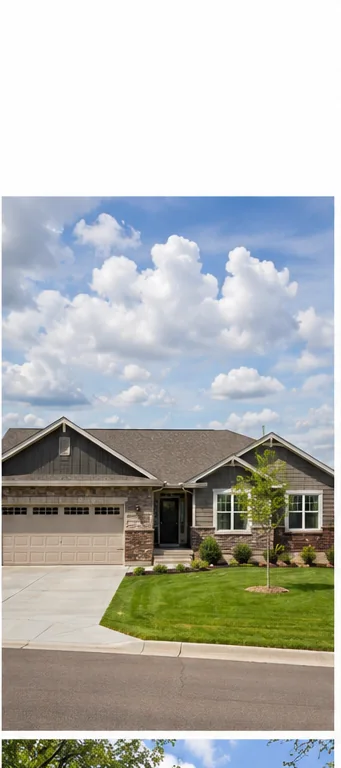
Single-storey yellow brick rambler with attached garage — Duplex & Multifamily Inspection in Storm Lake, IAStorm Lake
Calibrated

Tuned to Storm Lake.

Storm Lake housing runs to homes from the 1870s railroad-town origins through early-1900s houses near downtown, postwar ranches, and newer subdivisions and multifamily housing added as the community grew, across the older blocks near downtown and the university, the streets along the north shore of the lake and the newer edges of town, on the western edge of the Des Moines Lobe, a young glacial landscape of flat to gently rolling till and a natural glacial lake — and that mix shapes what a duplex & multifamily inspection here needs to find. Instrument-grade tools, a local eye, every visit.

Local conditions in Storm Lake

No Iowa law requires a home inspection before a sale — the one mandatory time-of-transfer inspection covers private septic systems (Iowa Code 455B.172) — which makes an independent inspection the only thorough, buyer-side read on a Storm Lake home. Storm Lake sits in Buena Vista County, and every Iowa county is EPA Radon Zone 1. Iowa HHS reports Iowa has the largest percentage of homes above the 4.0 pCi/L action level of any state — 71.6 percent in the Iowa Radon Survey — and the Iowa seller disclosure form asks for any known radon test results. Finished basements concentrate it, and only a 48-hour test gives you this home's number. Iowa leaves frost depth to the local building code rather than one statewide number, and the annual freeze-thaw cycle drives the settlement cracks and ice-dam wear we calibrate every Storm Lake visit to find.

Questions

Common questions.

Do you inspect duplexes and fourplexes, or only single-family homes?
Yes — duplexes, triplexes and fourplexes are inspected as residential properties. The InterNACHI and ASHI residential standards of practice both apply to buildings with four or fewer dwelling units, so a two- to four-unit building is squarely inside a normal home inspection scope. It is simply a larger job, because each unit carries its own heating, hot water, electrical and plumbing to evaluate on top of the shared structure and envelope.
Can you inspect a building with more than four units?
Yes, but as a commercial inspection rather than a residential one. The residential standards stop at four dwelling units; at five and up the applicable standard is the commercial one, which is a different scope and a different report format. We handle those under our light commercial service. If you are not sure which side of the line your building falls on, count the legal dwelling units — not the bedrooms and not the mailboxes.
How much does a duplex inspection cost, and is it quoted per unit or per building?
Scope is what drives it, not square footage, and in most cases the unit count is the main driver. A duplex has two of nearly everything a house has one of — two furnaces, two water heaters, two panels, two sets of fixtures — plus the shared roof, foundation and sewer lateral inspected once. A fourplex multiplies that again. Occupancy and add-ons such as radon, which scales by unit under the multifamily standard, matter too. Use the free instant quote request on this page with your unit count and we will send you a number.
Do you inspect every unit, or just one as a sample?
Every unit we are given access to. Sampling one unit and extrapolating is not a defensible way to inspect a building where each dwelling has its own furnace, water heater, panel and plumbing of different ages and repair histories. Units are commonly in very different condition — one owner-occupied and maintained, the other tenanted and deferred. Any unit we could not enter is listed by unit number in the report as not inspected.
What happens if a tenant will not let the inspector in?
That unit does not get inspected, and the report says so by unit number. This is the single biggest cause of an incomplete multifamily report. The inspection is only as complete as the access provided, so make access to every unit a written condition of your inspection contingency before the clock starts. Notice requirements are set by state landlord-tenant law and by each individual lease, and they differ between Iowa and Minnesota — your agent or attorney should confirm what applies.
Can you inspect an occupied rental property?
Yes, and most 2-4 unit buildings are at least partly occupied. Be aware of what occupancy conceals: stored belongings block electrical panels, water heaters, furnaces, attic hatches and crawlspace entries, and anything blocked is simply not inspected. Furniture, rugs, wall hangings and full closets cover the floors, wall bases and ceilings where water damage and pest activity show first. We document what was obstructed so you know exactly what the report does and does not cover.
What is checked between units in a duplex for fire safety?
The rated separation between the dwelling units. The IRC requires units in a two-family dwelling to be separated by wall and floor-ceiling assemblies with at least a one-hour fire-resistance rating (IRC R302.3), and the wall to run from the foundation to the underside of the roof sheathing unless an attic draftstop is provided above it. The defect we find most often in converted duplexes is exactly that: one continuous open attic over both units, so a fire in one enters the other unimpeded. We also look for unsealed penetrations, recessed lights and pull-down stairs cut through the assembly.
Is a townhouse held to the same fire separation as a duplex?
No — townhouse separation is a higher requirement. Buyers use the words interchangeably, but under the IRC a two-family dwelling (a duplex) is separated by a one-hour assembly under R302.3, while townhouse separation under R302.2 is commonly a two-hour assembly. Which one applies depends on how the building is actually legally configured and platted, not on what the listing calls it. We report what we observe and note where the construction does not match the description.
Does each unit need its own furnace, water heater and electrical panel?
Not necessarily — configurations vary, and that variation is part of what we document. Each piece of equipment gets its own evaluation: combustion venting, clearances, TPR discharge, expansion tank, age and remaining service life. In older Iowa and Minnesota buildings the recurring finding is piecemeal replacement — several appliances sharing one masonry chimney flue, or a water heater left orphaned on an oversized chimney after the furnace was swapped for a high-efficiency direct-vent unit. That is a backdrafting and carbon monoxide concern worth knowing about before closing.
Who pays the utilities if there is only one meter for the building?
Whoever the meter is wired to, which is why we trace it. In a single-family home there is one gas meter, one water shutoff and one main disconnect; in a 2-4 unit the question is which meter and which shutoff serves which unit. Recurring findings: unlabeled meter banks, one water shutoff controlling the whole building so no unit's fixture can be repaired without shutting everyone off, and common-area loads such as hallway lighting, shared laundry or the sump pump wired to one tenant's meter. That last one changes your rent-roll math.
Should I test for radon in a duplex or apartment building?
Yes, and one test does not characterize the building. Radon measurement in a multi-unit building follows a different standard than a single-family test: ANSI/AARST MA-MFLB-2023, effective December 1, 2023, calls for initial testing in 100 percent of ground-contact dwelling units plus 10 percent of upper-floor dwellings. A side-by-side duplex has two ground-contact units, so both are tested. Iowa HHS states the Iowa Radon Survey found Iowa has the nation's largest percentage of homes above EPA's 4 pCi/L action level, 71.6 percent; the Iowa Department of Natural Resources reports more than two in five Iowa homes have radon levels that pose a significant health risk.
Do I need a separate sewer scope on a multifamily property?
In most cases it is the single highest-value add-on for these buildings, because one lateral commonly serves the whole structure. A blockage or a collapsed section then takes every unit out at once and puts sewage in the shared basement where all of the mechanical equipment sits. Older buildings in established neighborhoods, clay laterals and mature trees are the classic combination. A standard inspection cannot see a buried line — only a camera can.
What should an investor be watching for in a 2-4 unit building?
Capital-expense timing and unpermitted work. Four furnaces installed the same year will fail the same winter, so the report should tell you the age and remaining life of every major component, not just whether it runs today. The second concern is a single-family house split into units without permits, where the fire separation was never built — that can affect financing, insurability and legal occupancy. We also flag shared-system exposure: one sump serving the whole basement with no backup, exterior egress stairs on shallow or heaved footings, and downspouts concentrating a large roof onto few discharge points.
Does living near Storm Lake mean a higher water table in the basement?
It can. Storm Lake is a natural glacial lake, and the flat, young Des Moines Lobe landscape around it drains slowly. Houses close to the shore or on low ground can have damp basements, working sump pumps and grading that sends water toward the foundation. We look at the sump pit and discharge, staining at the base of block or poured walls, window wells and how the lot slopes. The city has grown since the 1870s, so the age of a house tells us a lot about its wiring, plumbing and roof layers, and Buena Vista County is EPA Radon Zone 1, so a test is a sensible add-on.
Free instant quote

Build your quote in 30 seconds.

No phone tag, no callback delay. Price and book your inspection right here — it takes about 30 seconds and there is no obligation.

Free Instant Quote & SchedulerPowered by InspectorData
Free Instant Quote