
Mold & Moisture Inspection in Walcott
Mold & Moisture Inspection in Walcott, IA by Closer Look Inspectors. A photo-mapped digital report within 24 hours.
Mold & Moisture Inspection in Walcott
Mold & Moisture Inspection in Walcott, Scott County, by Closer Look Inspectors. Walcott is a Scott and Muscatine County town platted in 1854 along the Rock Island line, named for railroad director William Walcott and incorporated on July 10, 1894, and we calibrate every visit to that.
A mold and moisture inspection — mold testing and mold detection in one visit — pairs infrared moisture mapping with lab-backed sampling to locate active moisture and trace it to its source — a frequent issue in Iowa basements and older housing stock.
Walcott homes are inspected by a local partner in our Iowa network. · Call or text (563) 517-7815
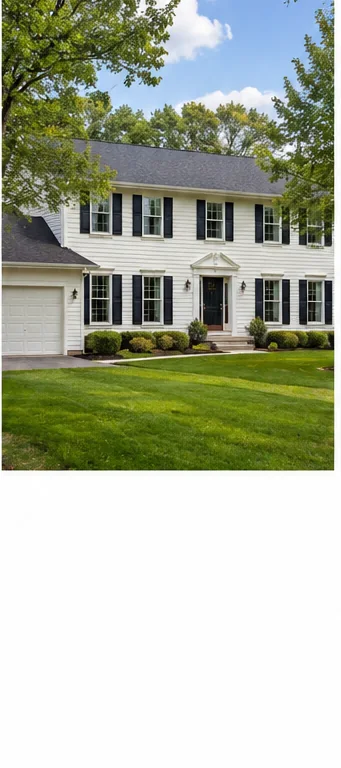 Walcott
Tuned to Walcott.
Walcott housing runs to houses from the railroad years after 1854 and the 1894 incorporation, a postwar stock as the count rose from 480 residents in 1950 to 1,425 in 1980, and later infill up to a 2010 count of 1,629, across the original railroad townsite, the Highway 6 area added to the city in 1962 and the Interstate 80 interchange area annexed in 1973, on a loess-mantled upland plain of eastern Iowa at about 730 feet elevation, in Scott and Muscatine counties — and that mix shapes what a mold & moisture inspection here needs to find. Instrument-grade tools, a local eye, every visit.
Local conditions in Walcott
No Iowa law requires a home inspection before a sale — the one mandatory time-of-transfer inspection covers private septic systems (Iowa Code 455B.172) — which makes an independent inspection the only thorough, buyer-side read on a Walcott home. Walcott sits in Scott County, and every Iowa county is EPA Radon Zone 1. Iowa HHS reports Iowa has the largest percentage of homes above the 4.0 pCi/L action level of any state — 71.6 percent in the Iowa Radon Survey — and the Iowa seller disclosure form asks for any known radon test results. Finished basements concentrate it, and only a 48-hour test gives you this home's number. Iowa leaves frost depth to the local building code rather than one statewide number, and the annual freeze-thaw cycle drives the settlement cracks and ice-dam wear we calibrate every Walcott visit to find.
Common questions.
How do you test for mold?
What drives moisture problems here?
Walcott built a water system in 1897 and a sewage system in 1914. What does that mean for an older house?
More across Iowa.
Mold & Moisture Inspection nearby
- Mold & Moisture Inspection in Stockton · Muscatine County
- Mold & Moisture Inspection in Blue Grass · Scott County
- Mold & Moisture Inspection in Durant · Cedar County
- Mold & Moisture Inspection in Buffalo · Scott County
- Mold & Moisture Inspection in Davenport · Scott County
- Mold & Moisture Inspection in Wilton · Muscatine County
Questions about mold & moisture inspection
Build your quote in 30 seconds.
No phone tag, no callback delay. Price and book your inspection right here — it takes about 30 seconds and there is no obligation.