
Water testing in Shannon City
Water testing for Iowa homes, above all those on a private well. An accredited laboratory can test the water for coliform bacteria and E. coli…
Well Water Testing in Shannon City
Water testing for Iowa homes, above all those on a private well. An accredited laboratory can test the water for coliform bacteria and E. coli, nitrate, arsenic and more. Iowa DNR recommends testing a private well at least once a year.
Shannon City is a small town surveyed by the Chicago Great Western Railway in 1887 and platted in 1888 on the Union-Ringgold county line, with the Grand River to its southeast. Housing here runs to houses from the railroad years after the 1888 platting, many rebuilt on the Union County side after the 1889-1891 fire, and a stock built toward the 1900 peak of 380 residents, across the townsite straddling the Union and Ringgold County line and the farm ground and acreages around it.
Shannon City homes are inspected by a local partner in our Iowa network. · Call or text (563) 517-7815
Well water in Union County
Iowa DNR recommends that private well owners test for coliform bacteria and nitrate each year and test for arsenic at least once. The Iowa Geological Survey says Dakota aquifer water in its 16-county study area is generally fair to poor, with aquifer depth the main influence on dissolved solids and sulfate. That is a regional study, not a Union County measurement, so a test of the well itself is the reliable answer.
County facts checked October 2026 against: iowadnr.gov, iowadnr.gov, igs.iihr.uiowa.edu, igs.iihr.uiowa.edu.
Home inspection in Shannon City → · Water testing in Iowa, explained →
Pairs well with:
Water tests available in Shannon City
Bacteria
Shows whether surface water or waste is reaching the well.
- Surface contamination reaching the well
- Fecal contamination from septic, manure or wildlife
Health chemicals
No taste, color or smell. These are the long-term health checks.
- Fertilizer, septic and manure; highest risk to infants10 mg/L (EPA)
- Natural arsenic from rock and soil10 µg/L (EPA)
- Lead service lines, solder and brass fixtures
- ManganeseNatural manganese; a concern for infants
- FluorideNatural fluoride; dental health4.0 mg/L (EPA)
- UraniumNatural radionuclide in groundwater30 µg/L (EPA)
Petroleum & solvents
Fuel and chemical spills from old tanks or nearby sites.
Household quality
Staining, scale and taste, and choosing the right treatment.
- IronRusty staining and metallic taste
- HardnessScale buildup; sizing a water softenerNo health standard
- pHCorrosive or scaling water6.5 to 8.5, aesthetic (EPA)
- SulfateTaste and odor; diarrhea risk for infants250 mg/L, aesthetic (EPA)
Limits shown are EPA drinking water standards. Compare your lab results with these values.
Shannon City private well testing timeline
| Test | Year 1 | Year 2 | Year 3 | Year 4 | Year 5 | Year 6 |
|---|---|---|---|---|---|---|
| Coliform bacteria | ||||||
| Nitrate | ||||||
| Arsenic |
When to test your water
- Every yearColiform bacteria and nitrate, the basic safety checks for a private well.
- At least onceArsenic and manganese. Iowa DNR's testing list repeats arsenic every 3 years.
- Before a baby drinks the waterNitrate. Water above 10 mg/L as nitrogen should not be used for infant formula or juice.
- When you buy a homeA full baseline while you can still ask questions or negotiate.
- New well or well workWhen a well is new and after service on the well or pump.
- After a flood or power outageIf flood water was near or reached the well, or an outage dropped the water pressure.
- When taste, color or smell changesA change in the water is a reason to test.
- Near a fuel tankVOCs, plus DRO for diesel and fuel oil. Iowa DNR names gasoline among the VOCs some wells are susceptible to, and Iowa's well rules list 100 feet between a well and a liquid fuel storage tank other than propane.
- City water in an older homeLead. Iowa DNR says homes built before 1986 are more likely to have lead pipes, fixtures and solder.
Based on: Iowa DNR private wells, Iowa DNR testing frequency, Iowa DNR why test, Iowa DNR floods, State Hygienic Laboratory, 567 IAC 49.
How to get it done
- Choose your testsPick the water testing you need in the free instant quote.
- Pick a timeBook online. The quote takes about 30 seconds.
- Get certified lab resultsA certified laboratory analyzes the water and reports each result.
Wells and water around Shannon City
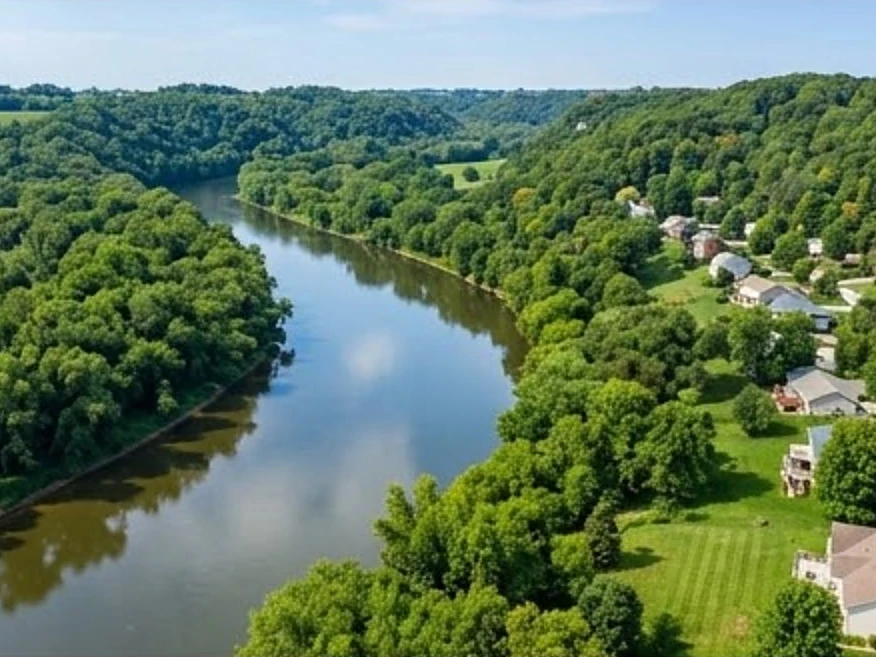
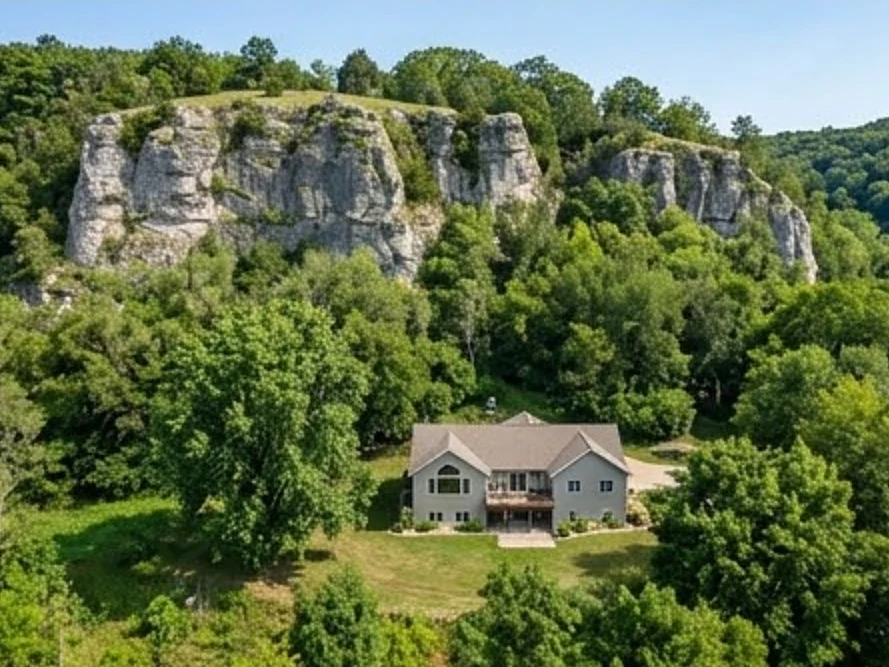
How far a well must be from common hazards in Shannon City
- Property line4 ft
- Building sewer line10 ft
- LP gas tank15 ft
- Roadside ditch15 ft
- Stream, pond, lake or wetland25 ft
- Septic tank50 ft
- Septic absorption field100 ft
- Fuel oil or gasoline tank100 ft
- Fertilizer or chemical storage150 ft
Septic, feedlot or fuel tank near the well? A coliform and nitrate test shows whether it is reaching the water. Get a free instant quote
Buying a home with a well in Shannon City: what happens at the sale
- Groundwater Hazard StatementIowa Code 558.69 requires a groundwater hazard statement filed with the declaration of value when a listed condition (including any known well and its status under 455B.190, or a private sewage disposal system) exists on the property, signed by a seller or agent, with a copy given to the buyer.
- Wells on the propertyIf known wells are on the property, the statement must give the approximate location of each and its status under Iowa Code 455B.190 (abandoned wells properly plugged); the owner is responsible for the accuracy of the information.
- Septic time-of-transfer inspectionIowa Code 455B.172(11) requires a private sewage disposal system serving a building to be inspected before any transfer of ownership, by a DNR-certified inspector, and the county recorder will not record the deed without the report or a binding acknowledgment.
- Failing systemsA system that is failing to treat wastewater must be renovated to current standards by the seller or, by agreement and within a reasonable time set by the county board of health or DNR, by the buyer (455B.172(11)(c)).
The paperwork tells you a well exists, not what is in it. Add water testing to your inspection. Get a free instant quote
Common questions.
Who needs well water testing in Iowa?
Is well water testing part of the home inspection?
My home is on city water in Iowa. Is water testing still worth it?
What drives poorer water quality in southern Iowa's Dakota aquifer?
Shannon City straddles two counties. Does that change anything for a buyer?
Do I need a permit to drill or replace a private well?
How often should a private well be tested in Iowa?
More across Iowa.
Well Water Testing nearby
- Well Water Testing in Arispe · Union County
- Well Water Testing in Tingley · Ringgold County
- Well Water Testing in Diagonal · Ringgold County
- Well Water Testing in Ellston · Ringgold County
- Well Water Testing in Afton · Union County
- Well Water Testing in Creston · Union County
Other inspections in Shannon City
- Residential Inspection in Shannon City
- Buyer's Inspection in Shannon City
- Pre-Listing Inspection in Shannon City
- Radon Testing in Shannon City
- Sewer Scope Inspection in Shannon City
- Thermal Imaging in Shannon City
- Mold Inspection in Shannon City
- Foundation Inspection in Shannon City
- Roof Inspection in Shannon City
- HVAC Inspection in Shannon City
- Electrical Inspection in Shannon City
- Plumbing Inspection in Shannon City
- New Construction Inspection in Shannon City
- 11-Month Warranty Inspection in Shannon City
Questions about well water testing
In-depth guides
Build your quote in 30 seconds.
No phone tag, no callback delay. Price and book your inspection right here — it takes about 30 seconds and there is no obligation.