
Water testing in Weldon
Water testing for Iowa homes, above all those on a private well. An accredited laboratory can test the water for coliform bacteria and E. coli…
Well Water Testing in Weldon
Water testing for Iowa homes, above all those on a private well. An accredited laboratory can test the water for coliform bacteria and E. coli, nitrate, arsenic and more. Iowa DNR recommends testing a private well at least once a year.
Weldon is a Decatur County town laid out on August 3, 1880 after the Missouri, Iowa and Nebraska Railroad was built halfway across the county, home to the Weldon Depot, which operated from 1881 to 1946 and was listed on the National Register in 1991. Housing here runs to houses from the railroad years after 1880, a peak of 323 residents in 1920, and later postwar and newer homes, across the extra-wide Main Street, the Weldon Depot area and the older residential blocks.
Weldon homes are inspected by a local partner in our Iowa network. · Call or text (563) 517-7815
Well water in Decatur County
The Iowa DNR recommends yearly coliform bacteria and nitrate testing and at least one arsenic test for every private well, including those in Decatur County. The Iowa Geological Survey's water atlas for Decatur County dates to 1967, so a current lab test of your own well is the reliable guide.
County facts checked October 2026 against: iowadnr.gov, iowadnr.gov, igs.iihr.uiowa.edu, igs.iihr.uiowa.edu.
Home inspection in Weldon → · Water testing in Iowa, explained →
Pairs well with:
Water tests available in Weldon
Bacteria
Shows whether surface water or waste is reaching the well.
- Surface contamination reaching the well
- Fecal contamination from septic, manure or wildlife
Health chemicals
No taste, color or smell. These are the long-term health checks.
- Fertilizer, septic and manure; highest risk to infants10 mg/L (EPA)
- Natural arsenic from rock and soil10 µg/L (EPA)
- Lead service lines, solder and brass fixtures
- ManganeseNatural manganese; a concern for infants
- FluorideNatural fluoride; dental health4.0 mg/L (EPA)
- UraniumNatural radionuclide in groundwater30 µg/L (EPA)
Petroleum & solvents
Fuel and chemical spills from old tanks or nearby sites.
Household quality
Staining, scale and taste, and choosing the right treatment.
- IronRusty staining and metallic taste
- HardnessScale buildup; sizing a water softenerNo health standard
- pHCorrosive or scaling water6.5 to 8.5, aesthetic (EPA)
- SulfateTaste and odor; diarrhea risk for infants250 mg/L, aesthetic (EPA)
Limits shown are EPA drinking water standards. Compare your lab results with these values.
Weldon private well testing timeline
| Test | Year 1 | Year 2 | Year 3 | Year 4 | Year 5 | Year 6 |
|---|---|---|---|---|---|---|
| Coliform bacteria | ||||||
| Nitrate | ||||||
| Arsenic |
When to test your water
- Every yearColiform bacteria and nitrate, the basic safety checks for a private well.
- At least onceArsenic and manganese. Iowa DNR's testing list repeats arsenic every 3 years.
- Before a baby drinks the waterNitrate. Water above 10 mg/L as nitrogen should not be used for infant formula or juice.
- When you buy a homeA full baseline while you can still ask questions or negotiate.
- New well or well workWhen a well is new and after service on the well or pump.
- After a flood or power outageIf flood water was near or reached the well, or an outage dropped the water pressure.
- When taste, color or smell changesA change in the water is a reason to test.
- Near a fuel tankVOCs, plus DRO for diesel and fuel oil. Iowa DNR names gasoline among the VOCs some wells are susceptible to, and Iowa's well rules list 100 feet between a well and a liquid fuel storage tank other than propane.
- City water in an older homeLead. Iowa DNR says homes built before 1986 are more likely to have lead pipes, fixtures and solder.
Based on: Iowa DNR private wells, Iowa DNR testing frequency, Iowa DNR why test, Iowa DNR floods, State Hygienic Laboratory, 567 IAC 49.
How to get it done
- Choose your testsPick the water testing you need in the free instant quote.
- Pick a timeBook online. The quote takes about 30 seconds.
- Get certified lab resultsA certified laboratory analyzes the water and reports each result.
Wells and water around Weldon
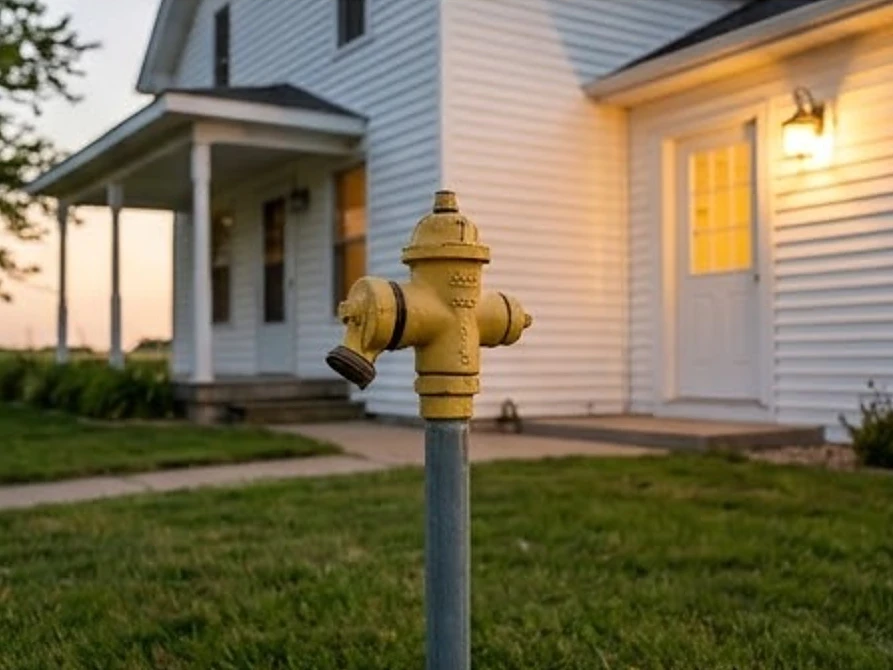
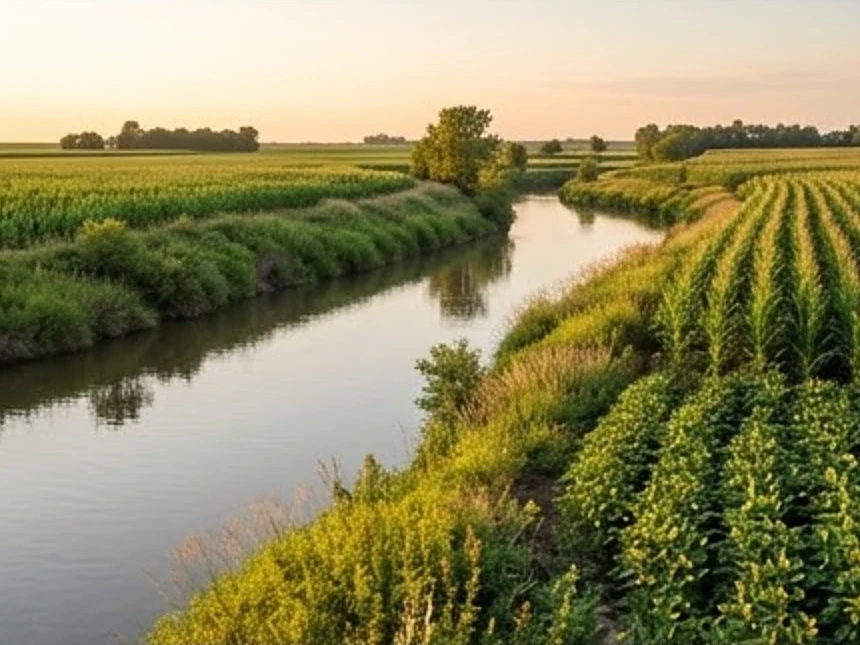
How far a well must be from common hazards in Weldon
- Property line4 ft
- Building sewer line10 ft
- LP gas tank15 ft
- Roadside ditch15 ft
- Stream, pond, lake or wetland25 ft
- Septic tank50 ft
- Septic absorption field100 ft
- Fuel oil or gasoline tank100 ft
- Fertilizer or chemical storage150 ft
Septic, feedlot or fuel tank near the well? A coliform and nitrate test shows whether it is reaching the water. Get a free instant quote
Buying a home with a well in Weldon: what happens at the sale
- Groundwater Hazard StatementIowa Code 558.69 requires a groundwater hazard statement filed with the declaration of value when a listed condition (including any known well and its status under 455B.190, or a private sewage disposal system) exists on the property, signed by a seller or agent, with a copy given to the buyer.
- Wells on the propertyIf known wells are on the property, the statement must give the approximate location of each and its status under Iowa Code 455B.190 (abandoned wells properly plugged); the owner is responsible for the accuracy of the information.
- Septic time-of-transfer inspectionIowa Code 455B.172(11) requires a private sewage disposal system serving a building to be inspected before any transfer of ownership, by a DNR-certified inspector, and the county recorder will not record the deed without the report or a binding acknowledgment.
- Failing systemsA system that is failing to treat wastewater must be renovated to current standards by the seller or, by agreement and within a reasonable time set by the county board of health or DNR, by the buyer (455B.172(11)(c)).
The paperwork tells you a well exists, not what is in it. Add water testing to your inspection. Get a free instant quote
Common questions.
Who needs well water testing in Iowa?
Is well water testing part of the home inspection?
My home is on city water in Iowa. Is water testing still worth it?
Is there a state report on groundwater in Decatur County?
Weldon was platted in 1880 around a railroad depot. What does that tell me about older houses in town?
When should I test the water if I'm buying a home with a well?
Is there arsenic in Iowa well water?
More across Iowa.
Well Water Testing nearby
- Well Water Testing in Van Wert · Decatur County
- Well Water Testing in Le Roy · Decatur County
- Well Water Testing in Garden Grove · Decatur County
- Well Water Testing in Osceola · Clarke County
- Well Water Testing in Woodburn · Clarke County
- Well Water Testing in Leon · Decatur County
Other inspections in Weldon
- Residential Inspection in Weldon
- Buyer's Inspection in Weldon
- Pre-Listing Inspection in Weldon
- Radon Testing in Weldon
- Sewer Scope Inspection in Weldon
- Thermal Imaging in Weldon
- Mold Inspection in Weldon
- Foundation Inspection in Weldon
- Roof Inspection in Weldon
- HVAC Inspection in Weldon
- Electrical Inspection in Weldon
- Plumbing Inspection in Weldon
- New Construction Inspection in Weldon
- 11-Month Warranty Inspection in Weldon
Questions about well water testing
In-depth guides
Build your quote in 30 seconds.
No phone tag, no callback delay. Price and book your inspection right here — it takes about 30 seconds and there is no obligation.