
Water testing in Wykoff
Water testing for Minnesota homes, above all those on a private well. An accredited laboratory tests the water for coliform bacteria and E. coli…
Well Water Testing in Wykoff
Water testing for Minnesota homes, above all those on a private well. An accredited laboratory tests the water for coliform bacteria and E. coli, nitrate, arsenic, lead, manganese, VOCs (volatile organic compounds), DRO (diesel range organics), iron, hardness, pH, fluoride, sulfate and uranium. The Minnesota Department of Health recommends testing a private well for coliform bacteria every year, nitrate every year, and arsenic and lead at least once.
Wykoff is a small town deep in Fillmore County's sinkhole-riddled karst country. Housing here runs to older bluff-country town homes, across the town core.
Questions about a Wykoff home? · Call or text (612) 457-1634
Well water in Fillmore County
Fillmore County was tested by MDA in 2017-2018, and because of the complexity of its karst geology, every township was included. The initial dataset held 1,477 wells, and 16.9% were at or above 10 mg/L nitrate-nitrogen. After MDA removed wells with other likely nitrate sources or well problems, the final dataset of 1,070 wells was 5.0%, and Preble Township reached 23.3%. MDH says karst lets surface water reach groundwater in hours or days, so a single township figure does not describe your well.
County facts checked October 2026 against: mda.state.mn.us, mda.state.mn.us, Minnesota Department of Health.
Water testing in Wykoff: what matters
Home inspection in Wykoff → · More about well water testing → · Every water test, explained →
Pairs well with:
Water tests available in Wykoff
Bacteria
Shows whether surface water or waste is reaching the well.
- Surface contamination reaching the wellNone should be present (MDH)
- Fecal contamination from septic, manure or wildlifeNone should be present (MDH)
Health chemicals
No taste, color or smell. These are the long-term health checks.
- Fertilizer, septic and manure; highest risk to infants10 mg/L (EPA)
- Natural arsenic from Minnesota rock and soil10 µg/L (EPA)
- Lead service lines, solder and brass fixturesNo safe level (MDH)
- ManganeseNatural manganese; a concern for infants100 µg/L for infants (MDH guidance)
- FluorideNatural fluoride; dental health4.0 mg/L (EPA)
- UraniumNatural radionuclide in groundwater30 µg/L (EPA)
Petroleum & solvents
Fuel and chemical spills from old tanks or nearby sites.
Household quality
Staining, scale and taste, and choosing the right treatment.
- IronRusty staining and metallic taste0.3 mg/L, aesthetic (MDH)
- HardnessScale buildup; sizing a water softenerNo health standard
- pHCorrosive or scaling water6.5 to 8.5, aesthetic (EPA)
- SulfateTaste and odor; diarrhea risk for infants250 mg/L, aesthetic (EPA)
Limits from MDH, EPA and MPCA. Compare your lab results with these values.
Wykoff private well testing timeline
| Test | Year 1 | Year 2 | Year 3 | Year 4 | Year 5 | Year 6 |
|---|---|---|---|---|---|---|
| Coliform bacteria | ||||||
| Nitrate | ||||||
| Arsenic | ||||||
| Lead |
When to test your water
- Every yearColiform bacteria and nitrate, the basic safety checks for a private well. Nitrate can come from fertilizer, septic systems and animal waste.
- At least onceArsenic and lead. Arsenic can differ even between neighboring wells.
- Before a baby drinks the waterColiform bacteria, nitrate, arsenic, lead and manganese. MDH recommends testing a private well for all five before a baby drinks the water.
- When you buy a homeA full baseline while you can still ask questions or negotiate.
- After flooding or well workFlooding and repairs to the well are reasons to test again.
- When taste, color or smell changesMDH says a change in taste, smell or look is a reason to test for coliform bacteria.
- Near a fuel tank or industrial siteVOCs, plus DRO for diesel and heating oil. MDH says to consider a VOC test if the well is near fuel tanks or a commercial or industrial area.
- City water in an older homeLead. MDH says homes built before 1940 may have lead service lines, and plumbing parts made before 1986 may contain lead.
Based on: MDH well testing, MDH coliform bacteria, MDH nitrate, MDH water for babies, MDH flood precautions, MDH lead.
How to get it done
- Choose your testsPick the water testing you need in the free instant quote.
- Pick a timeBook online. The quote takes about 30 seconds.
- Get certified lab resultsA certified laboratory analyzes the water and reports each result.
Nitrate in Fillmore County wells
5% of 1,070 wells tested in every township (final dataset) were at or over the 10 mg/L nitrate standard (MDA township testing, 2017-2018).
Township numbers are averages. Only a test of your own well tells you its nitrate level. Get a free instant quote
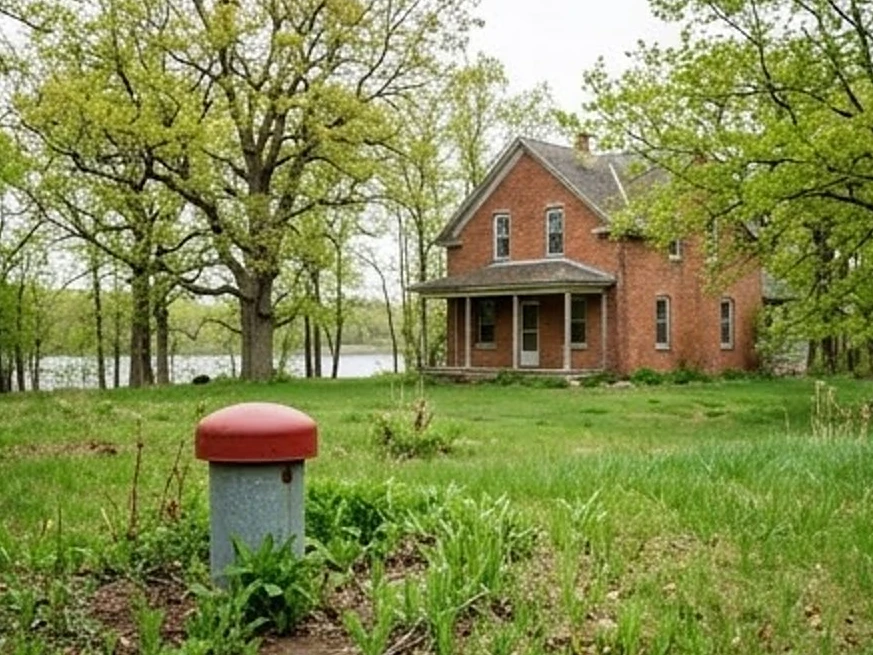
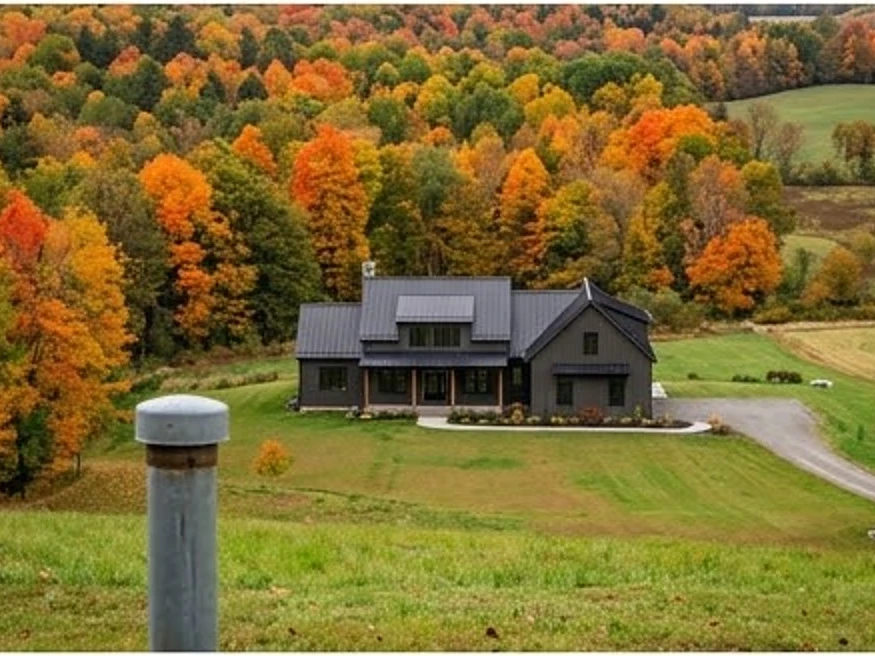
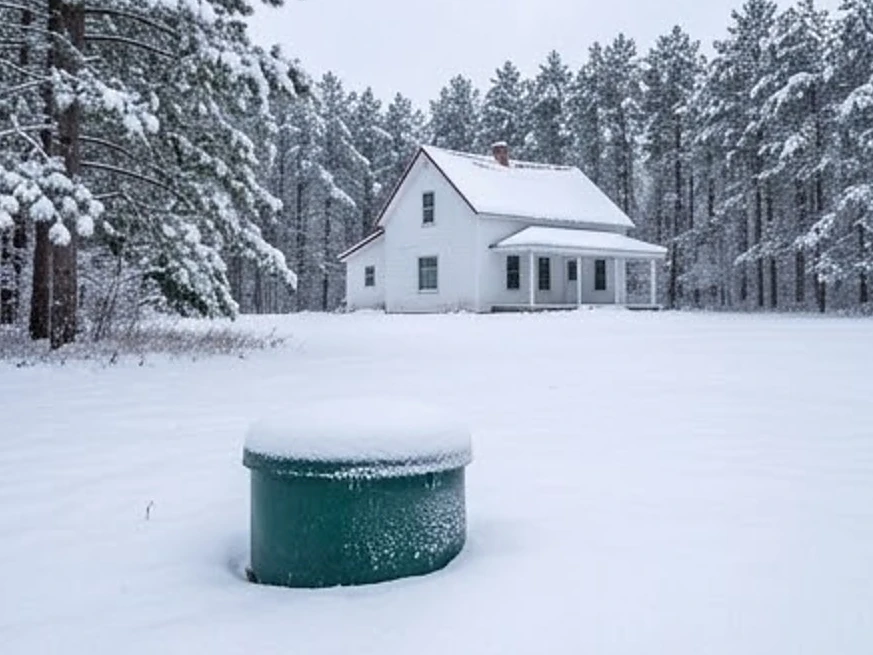
What a properly finished wellhead looks like in Wykoff
- Casing at least 12 inches above the ground, slab or well house floor.
- Vent ends at least 12 inches above ground, screened, opening facing down.
- Ground graded so water drains away. A casing ending below ground, as in a well pit, is not allowed.
A short casing or a buried well pit lets surface water in. A coliform bacteria test shows whether it is reaching the water. Get a free instant quote
Buying a home with a well in Wykoff: the disclosure rules
- Before the purchase agreementThe seller discloses in writing every known well and whether it is in use, not in use or sealed.
- At closingA well disclosure certificate is signed, unless the deed says the seller knows of no wells.
- If a well was hiddenA seller who knew of an undisclosed well can owe the sealing cost and attorney fees if the buyer sues within six years.
The disclosure tells you a well exists, not what is in it. Add water testing to your inspection. Get a free instant quote
Common questions.
Who needs well water testing?
What does the water panel cover?
How often should a well be tested?
Is well water testing part of the home inspection?
How common is high nitrate in Fillmore County well water?
My home is on city water. Is water testing still worth it?
When should a home be tested for DRO or VOCs?
Does karst ground affect Wykoff homes?
What is the safe level of nitrate in drinking water in Minnesota?
Is E. coli in well water dangerous?
How deep are private wells in Minnesota, and what kind of aquifer do they use?
How can I tell if there is a forgotten well on my property?
More across Minnesota.
Well Water Testing nearby
- Well Water Testing in Spring Valley · Fillmore County
- Well Water Testing in Fountain · Fillmore County
- Well Water Testing in Preston · Fillmore County
- Well Water Testing in Chatfield · Fillmore County
- Well Water Testing in Racine · Mower County
- Well Water Testing in Lanesboro · Fillmore County
Other inspections in Wykoff
- Residential Inspection in Wykoff
- Buyer's Inspection in Wykoff
- Pre-Listing Inspection in Wykoff
- Radon Testing in Wykoff
- Sewer Scope Inspection in Wykoff
- Thermal Imaging in Wykoff
- Mold Inspection in Wykoff
- Foundation Inspection in Wykoff
- Roof Inspection in Wykoff
- HVAC Inspection in Wykoff
- Electrical Inspection in Wykoff
- Plumbing Inspection in Wykoff
- New Construction Inspection in Wykoff
- 11-Month Warranty Inspection in Wykoff
Questions about well water testing
Build your quote in 30 seconds.
No phone tag, no callback delay. Price and book your inspection right here — it takes about 30 seconds and there is no obligation.