Reports within 24 hours · Get your free instant quote
Manufactured & Modular Home Inspection · North Oaks, MN

Manufactured & Modular Home Inspection in North Oaks

Manufactured & Modular Home Inspection in North Oaks, MN by Closer Look Inspectors. A photo-mapped digital report within 24 hours.

North Oaks · Ramsey County

Manufactured & Modular Home Inspection in North Oaks

Manufactured & Modular Home Inspection in North Oaks, Ramsey County, by Closer Look Inspectors. North Oaks is a private planned community on the former James J. Hill farm, with HOA-owned roads.

Manufactured and modular homes are built and financed differently — and most of what goes wrong is under the floor where nobody looks. The pier and footing system, the anchoring, the skirting, the marriage line, the chassis, and the belly wrap and underfloor ductwork that have no site-built equivalent are where moisture and movement problems start. A manufactured home inspection helps a buyer, an owner or a lender decide whether to buy, finance, repair or keep a home based on what is really there. Start with the free instant quote on this page.

North Oaks is served by our Saint Paul team →  ·  (612) 457-1634

Two-story home with lit windows in fresh snow at dusk — Manufactured & Modular Home Inspection in North Oaks, MNNorth Oaks
Local housing

Homes in North Oaks.

North Oaks housing runs to large custom homes from the postwar planned-community years to the present, plus a few preserved Hill farm buildings, across the NOHOA neighborhoods, the wooded lots and wetland edges, and the preserved Hill farm buildings, on rolling glacial upland with lakes and wetlands north of St. Paul, on land once the James J. Hill farm — and that mix shapes what a manufactured & modular home inspection here needs to find.

Local conditions in North Oaks

North Oaks does not run a point-of-sale housing ordinance, which makes an independent inspection the only thorough, buyer-side read on the home. North Oaks sits in Ramsey County, in EPA Radon Zone 1, and MDH reports more than two in five Minnesota homes have radon levels that pose a significant health risk. Finished basements concentrate radon, and only a 48-hour test tells you the number. Footings here must reach the 3-1/2-foot depth Minnesota Rules 1303.1600 set for the southern frost zone, and that annual freeze-thaw cycle is what drives the settlement cracks, frost heave and ice-dam wear that North Oaks-area homes face.

Common problem areas in manufactured homes

Manufactured homes tend to show wear in the same few places, and several of them are out of sight on the roof or under the floor.

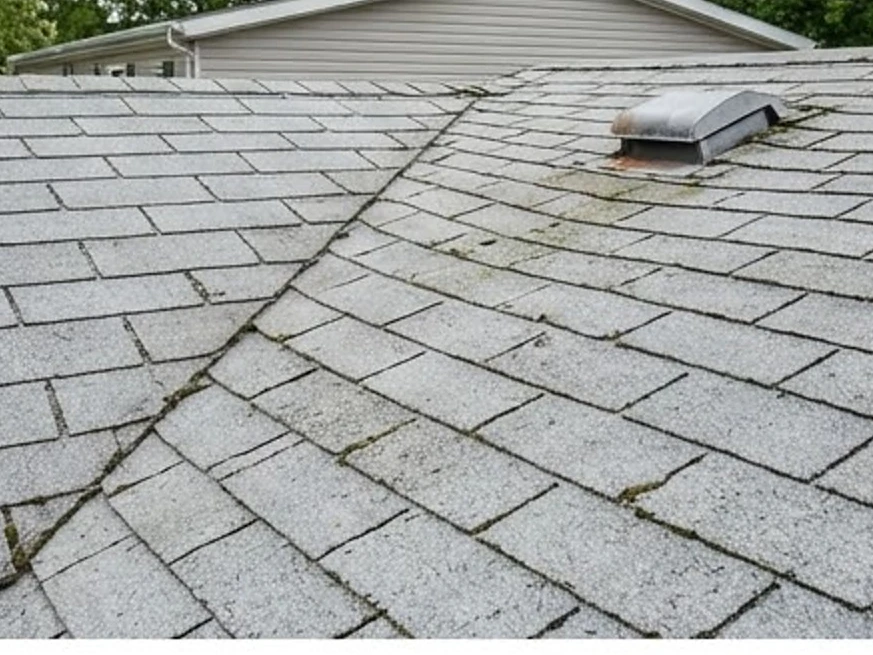
  • Roof seams and vents: On metal roofs, seams and screws driven into trusses are typical leak sites, and severe rust or broken plumbing vents can leak too. Wet roof insulation stops doing its job.
  • Leaks under the floor: Most damage to the belly board, the layer that keeps rodents out, comes from leaking pipes and drains or holes cut to thaw pipes. Problems here stay out of sight.
  • Underfloor ductwork: Heating ducts often run beneath the floor. Leaky or separated joints, crossover ducts and furnace connections send heat into the belly, wasting energy and leaving far rooms short on heat.
  • Skirting and crawlspace moisture: Water at the wall edge can reach the belly where skirting is poorly installed, and ground moisture vapor can enter the belly cavity, leaving insulation and floor framing damp.
  • Anchors and tie-downs: Straps loosen and anchors can fail. FEMA advises periodic checks, especially after wind or flood events, because unmaintained anchoring may fail in a later event.
  • Windows and doors: Louvered jalousie windows are prone to mechanical failure, and settling can distort frames until windows will not close properly. Damaged doors and windows are known air-leak spots that waste heat.

Finding out where a particular home stands on these points is what a manufactured home inspection is for, and the free instant quote is the place to start. Get your free instant quote → Sources: Cal Steiner, North Dakota Department of Commerce: Moisture, Leaks, and Pressures in Mobile Homes (Home Energy, March/April 2006), via U.S. Department of Energy, Bob Scott and Lyn Bartges, West Virginia Weatherization Assistance Program: Weatherizing Mobile Homes (Home Energy, July/August 2004), via U.S. Department of Energy, U.S. Department of Energy, Weatherization Assistance Program training: Mobile Home Belly Retrofit, U.S. Department of Energy, Weatherization Assistance Program training: Other Mobile Home Measures, FEMA: Protecting Manufactured Homes from Floods and Other Hazards (FEMA P-85), Chapter 7 Ground Anchors

Pairs well with:

Questions

Common questions.

What is the difference between a manufactured home and a modular home?
The chassis, mostly. A manufactured home is built on a permanent chassis that assures its continued transportability, and that chassis is the dividing line between the two. A modular home is built in a factory, has no chassis, and is generally appraised, financed, insured and titled like a site-built house. Knowing which kind of home you are buying matters for the loan, the insurance and the title, so it pays to find out before you commit.
Why does the manufactured-versus-modular distinction matter to my lender?
Because it changes the loan product. A modular home is generally appraised, financed, insured and titled as real property, essentially like a site-built house. A manufactured home may be titled as personal property on a vehicle title unless it has been converted to real property, which changes the loan type, the rate and the tax treatment entirely. Requirements vary by lender and loan program, so confirm the specifics with your loan officer — but knowing which kind of home you are buying is the first question to settle. The free instant quote on this page is the place to start a manufactured or modular home inspection.
Is a mobile home the same as a manufactured home?
Not for legal or lending purposes. Homes built on or after June 15, 1976 are manufactured homes. Anything built before that date is a mobile home, and it is generally not eligible for FHA, VA, Fannie Mae or Freddie Mac financing and is often difficult to insure. Individual lender and portfolio-loan policies vary, so confirm with your loan officer — but which side of that date a home falls on is frequently the single most consequential fact about it, and you want to know before you are committed. If you are weighing an older home, the free instant quote on this page is a quick way to get a manufactured home inspection started.
What if my lender asks for a foundation certification on a manufactured home?
If your lender asks for a foundation certification, it has to come from a licensed professional engineer — in some cases a registered architect — who issues a sealed letter. It is a separate document from the appraisal, and lenders commonly require it to be under six months old, so confirm the exact requirement with your loan officer. The conditions that will cause that certification to fail are no perimeter foundation, piers above frost depth, missing or failed anchoring, a damaged chassis, or the tow hitch and axles still attached. Finding them before the engineer does is the difference between fixing a list and failing a certification, which makes a manufactured home inspection the smart first step. Request the free instant quote on this page and mention the certification.
Do manufactured homes in Iowa and Minnesota need tie-downs, and how do I know mine are right?
Yes. Anchoring is the part of a manufactured home most likely to be missing, corroded or loosened over time, and in a region with the straight-line wind and derecho history this one has, its condition is worth verifying. Anchoring is a safety margin, not a guarantee against a tornado or a derecho. A properly anchored home has anchors driven to full depth, straps within two feet of the ends of the home, and diagonal straps between 30 and 60 degrees. Severed, slack, rusted or missing straps and anchors pulled part-way out are the common problems. A manufactured home inspection is how you find out whether yours are right — start with the free instant quote on this page.
Why does my manufactured home shift, crack and stick every winter?
Almost always because the footings or anchors do not reach below frost depth. The ground freezes and thaws every year here, so piers, footings and anchors set above the frost line lift in winter and drop in spring, and the home moves with them. Homes on blocks resting on grade heave every winter and drop every spring. A manufactured home inspection is how you find out where the footings and anchors really sit; the free instant quote on this page gets it started.
What is a marriage line, and why is my floor uneven?
The marriage line, or mating line, is where the two halves of a multi-section home join. An uneven floor, a crack running the length of the home along that seam, or a ceiling gap that opens and closes seasonally usually points to the support system underneath rather than the seam itself — most often missing marriage-line or perimeter piers, or footings settling and heaving independently on each side. The gasket between sections, whether the line was ever sealed in the crawlspace and attic, and the ridge-beam connections matter too, because water entry at the ridge is a classic source of long-run interior damage. A manufactured home inspection is how you find the real cause. Request the free instant quote on this page to get started.
What is belly wrap, and why does my manufactured home smell musty?
The belly wrap, or bottom board, is the membrane closing the underside of the floor system — the primary air and vapor control layer for the floor cavity and the rodent barrier. Punctures, sagging and missing sections are common past about 15 to 20 years. Once it fails, moisture saturates the floor insulation and raises the moisture content of the decking; above roughly 19 percent, rot and mold become active risks. A musty odor from the floor registers is the field symptom. The supply ducts run in that same belly, so they sag, separate, fill with water and sweat — and on a double-wide the crossover duct is very commonly found crushed or disconnected on the ground.
Does a manufactured home need skirting, and does it need vents?
Skirting is not decorative — it encloses the crawlspace and is part of the home's moisture and thermal system, but it is not a foundation and must not be load-bearing. The enclosed space needs an access opening for service, plus either adequate ventilation openings or a properly sealed crawlspace with a continuous ground vapor retarder. Damaged skirting is the other half of the story: missing panels, buried skirting, and rodent entry, which in this region is constant and destroys belly insulation. Whether to vent or seal a crawlspace in a cold climate is a genuine technical debate, and the manufacturer's installation instructions for the home are the benchmark.
Should I test for radon in a manufactured home?
Yes — the assumption that a home on piers cannot have radon is wrong. An enclosed, skirted crawlspace over bare soil is a radon reservoir, and the same torn belly wrap and duct, plumbing and crossover openings that let moisture into the floor cavity let soil gas into the living space, with winter stack effect driving it upward. The living area is what gets tested, not the crawlspace, since the crawlspace is not occupied space. Mitigation also differs: rather than sub-slab depressurization, the typical approach is sub-membrane depressurization under a sealed crawlspace vapor barrier, usually with bottom-board repair. In a park, ask whether the owner permits it before you test.
Is aluminum wiring in an older mobile home a problem?
Solid aluminum branch-circuit wiring, used in homes and mobile homes from roughly 1965 to 1973, is a documented fire hazard and an insurance issue. The Consumer Product Safety Commission estimates about two million homes and mobile homes were built with aluminum wiring since 1965 and reports that homes with it are 55 times more likely to have a connection reach fire-hazard conditions than homes wired with copper. The failure is at the connections. Accepted repairs such as COPALUM crimps or AlumiConn connectors are licensed electrician work. Aluminum service-entrance and feeder conductors are a different matter entirely and are normal and acceptable.
What should I know about the chassis, and can you inspect a park model?
The steel I-beam frame is permanent and structural, and its condition matters as structure: corrosion where a torn belly has exposed it to ground moisture, transport damage, bent outriggers, and unauthorized cutting or notching of the I-beams, often done to run plumbing or add a stair. For lending, the running gear — hitch, wheels and axles — generally has to be removed. A park model is a different animal: built as a recreational vehicle, generally under 400 square feet, titled as an RV, and typically not eligible for conventional mortgage financing. Whether one may be occupied year-round is a local zoning question.
How much does a manufactured home inspection cost?
Scope drives it. A single-section home over a crawlspace is a different job than a multi-section home with a marriage line, a full perimeter foundation and a basement, and add-ons such as radon testing change it again. Access matters too — skirting that cannot be opened and a crawlspace that cannot be entered limit what can be inspected and what needs to be reported. Send us the address and a description of the home through the free instant quote request on this page and you will get a figure for that specific property.
Are the wooded lots in North Oaks a problem for the house?
They can be. Trees close to the roof drop debris, hold moisture on shingles and can push roots toward foundations and lines. The roof surface and gutters, the drainage around the house, and any damp spots where wetlands or low ground come near are the points that matter. None of this is a reason to skip a home you like, but it tells you what maintenance to plan for.
Do the private roads and HOA in North Oaks matter to a buyer's inspection?
They do. North Oaks was developed after Louis Hill's death in 1948 as a planned community, and the North Oaks Home Owners Association maintains the roads and recreation. Each lot runs halfway into the street. The house is only part of the picture here, since how it drains onto private roads and common wetlands matters, as do driveway, septic-or-sewer status and outbuildings that may fall under association rules. Large lots with wooded grades often mean basement moisture and sump systems need close review. Ramsey County is EPA Radon Zone 1.
Free instant quote

Build your quote in 30 seconds.

No phone tag, no callback delay. Price and book your inspection right here — it takes about 30 seconds and there is no obligation.

Free Instant Quote & SchedulerPowered by InspectorData
Free Instant Quote