
Water testing in Rogers
Water testing for Minnesota homes, above all those on a private well. An accredited laboratory tests the water for coliform bacteria and E. coli…
Well Water Testing in Rogers
Water testing for Minnesota homes, above all those on a private well. An accredited laboratory tests the water for coliform bacteria and E. coli, nitrate, arsenic, lead, manganese, VOCs (volatile organic compounds), DRO (diesel range organics), iron, hardness, pH, fluoride, sulfate and uranium. The Minnesota Department of Health recommends testing a private well for coliform bacteria every year, nitrate every year, and arsenic and lead at least once.
Rogers is a northwest exurb of 2000s subdivisions and new commercial growth. Housing here runs to 2000s subdivisions with continuing new construction, across the newer subdivisions along the I-94 corridor.
Well water in Hennepin County
Hennepin County has no MDA township nitrate report on the schedule page, so there is no county well percentage to cite. MDH says about 10 percent of Minnesota private wells have arsenic above 10 ug/L, with levels varying over short distances, and that shallow and sand-aquifer wells are most exposed to nitrate. Boiling does not remove nitrate; it concentrates it. MDH lists coliform yearly, nitrate every year, and arsenic and lead at least once.
County facts checked September 2026 against: hennepincounty.gov, mda.state.mn.us, Minnesota Department of Health, Minnesota Department of Health, Minnesota Department of Health.
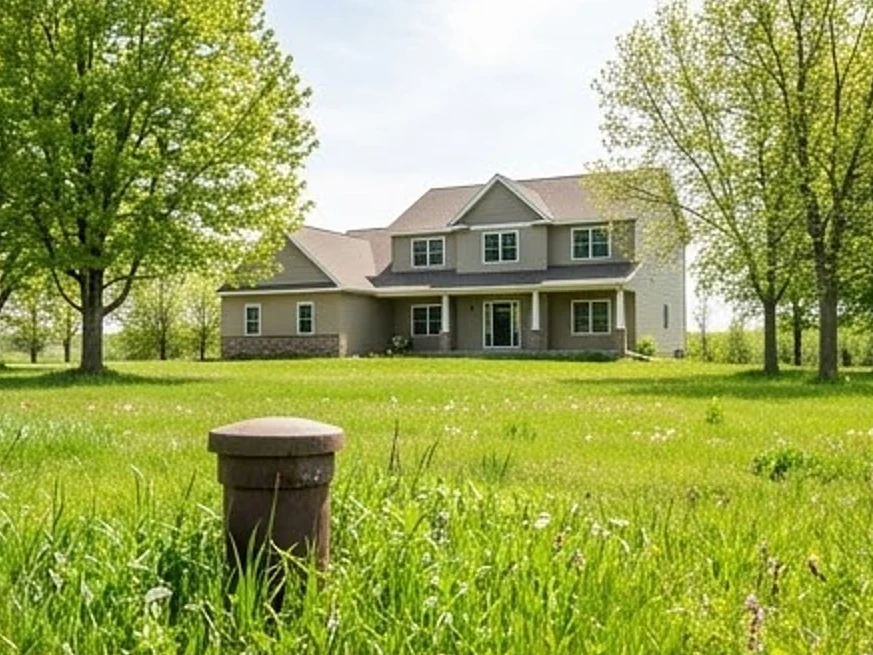
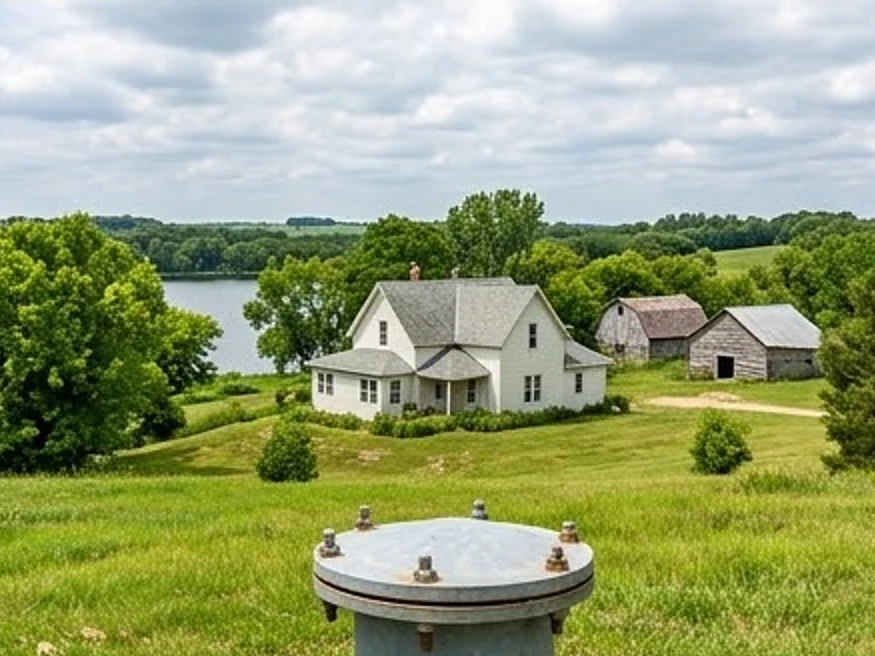
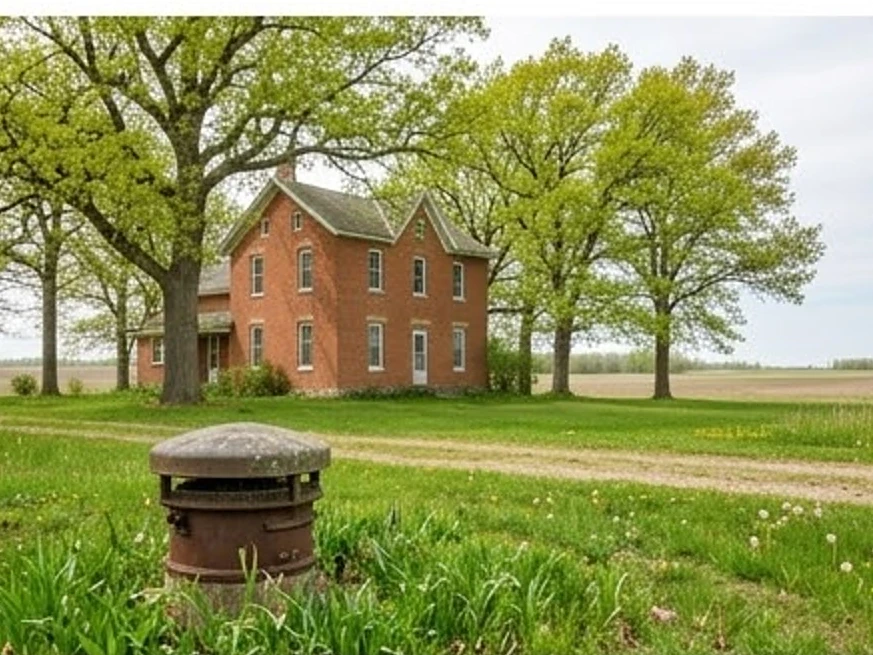
Well water around Rogers, Hennepin County
Home inspection in Rogers → · More about well water testing → · Every water test, explained →
Pairs well with:
Water tests available in Rogers
Bacteria
Shows whether surface water or waste is reaching the well.
- Surface contamination reaching the wellNone should be present (MDH)
- Fecal contamination from septic, manure or wildlifeNone should be present (MDH)
Health chemicals
No taste, color or smell. These are the long-term health checks.
- Fertilizer, septic and manure; highest risk to infants10 mg/L (EPA)
- Natural arsenic from Minnesota rock and soil10 µg/L (EPA)
- Lead service lines, solder and brass fixturesNo safe level (MDH)
- ManganeseNatural manganese; a concern for infants100 µg/L for infants (MDH guidance)
- FluorideNatural fluoride; dental health4.0 mg/L (EPA)
- UraniumNatural radionuclide in groundwater30 µg/L (EPA)
Petroleum & solvents
Fuel and chemical spills from old tanks or nearby sites.
Household quality
Staining, scale and taste, and choosing the right treatment.
- IronRusty staining and metallic taste0.3 mg/L, aesthetic (MDH)
- HardnessScale buildup; sizing a water softenerNo health standard
- pHCorrosive or scaling water6.5 to 8.5, aesthetic (EPA)
- SulfateTaste and odor; diarrhea risk for infants250 mg/L, aesthetic (EPA)
Limits from MDH, EPA and MPCA. Compare your lab results with these values.
Rogers private well testing timeline
| Test | Year 1 | Year 2 | Year 3 | Year 4 | Year 5 | Year 6 |
|---|---|---|---|---|---|---|
| Coliform bacteria | ||||||
| Nitrate | ||||||
| Arsenic | ||||||
| Lead |
When to test your water
- Every yearColiform bacteria and nitrate, the basic safety checks for a private well. Nitrate can come from fertilizer, septic systems and animal waste.
- At least onceArsenic and lead. Arsenic can differ even between neighboring wells.
- Before a baby drinks the waterColiform bacteria, nitrate, arsenic, lead and manganese. MDH recommends testing a private well for all five before a baby drinks the water.
- When you buy a homeA full baseline while you can still ask questions or negotiate.
- After flooding or well workFlooding and repairs to the well are reasons to test again.
- When taste, color or smell changesMDH says a change in taste, smell or look is a reason to test for coliform bacteria.
- Near a fuel tank or industrial siteVOCs, plus DRO for diesel and heating oil. MDH says to consider a VOC test if the well is near fuel tanks or a commercial or industrial area.
- City water in an older homeLead. MDH says homes built before 1940 may have lead service lines, and plumbing parts made before 1986 may contain lead.
Based on: MDH well testing, MDH coliform bacteria, MDH nitrate, MDH water for babies, MDH flood precautions, MDH lead.
How to get it done
- Choose your testsPick the water testing you need in the free instant quote.
- Pick a timeBook online. The quote takes about 30 seconds.
- Get certified lab resultsA certified laboratory analyzes the water and reports each result.
Buying a home with a well in Rogers: the disclosure rules
- Before the purchase agreementThe seller discloses in writing every known well and whether it is in use, not in use or sealed.
- At closingA well disclosure certificate is signed, unless the deed says the seller knows of no wells.
- If a well was hiddenA seller who knew of an undisclosed well can owe the sealing cost and attorney fees if the buyer sues within six years.
The disclosure tells you a well exists, not what is in it. Add water testing to your inspection. Get a free instant quote
How far a well must be from common hazards in Rogers
- Building (closest projection)3 ft
- Lake, river, stream or pond35 ft
- Septic tank50 ft
- Drainfield (soil dispersal area)50 ft (100 ft sensitive well)
- Animal feedlot or building (over 1 animal unit)50 ft
- Cesspool or seepage pit75 ft (150 ft sensitive well)
- Unroofed feedlot, 300+ animal units100 ft
- Unprotected petroleum tank, 1,100+ gallons150 ft
Septic, feedlot or fuel tank near the well? A coliform and nitrate test shows whether it is reaching the water. Get a free instant quote
Common questions.
Who needs well water testing?
What does the water panel cover?
How often should a well be tested?
Is well water testing part of the home inspection?
Do Hennepin County homes with private wells need arsenic testing?
My home is on city water. Is water testing still worth it?
When should a home be tested for DRO or VOCs?
Is hail damage a real concern in Rogers?
How often should I test my well for coliform bacteria in Minnesota?
How do I get nitrate out of my well water?
What happens if the seller doesn't disclose a well?
How common is arsenic in Minnesota well water?
More across Minnesota.
Well Water Testing nearby
- Well Water Testing in Hanover · Wright County
- Well Water Testing in Dayton · Hennepin County
- Well Water Testing in Corcoran · Hennepin County
- Well Water Testing in Albertville · Wright County
- Well Water Testing in St. Michael · Wright County
- Well Water Testing in Otsego · Wright County
Other inspections in Rogers
- Residential Inspection in Rogers
- Buyer's Inspection in Rogers
- Pre-Listing Inspection in Rogers
- Radon Testing in Rogers
- Sewer Scope Inspection in Rogers
- Thermal Imaging in Rogers
- Mold Inspection in Rogers
- Foundation Inspection in Rogers
- Roof Inspection in Rogers
- HVAC Inspection in Rogers
- Electrical Inspection in Rogers
- Plumbing Inspection in Rogers
- New Construction Inspection in Rogers
- 11-Month Warranty Inspection in Rogers
Questions about well water testing
Build your quote in 30 seconds.
No phone tag, no callback delay. Price and book your inspection right here — it takes about 30 seconds and there is no obligation.