
By the Closer Look Inspectors team · Facts checked October 2026 against the sources listed below · About our inspectors
For a West Saint Paul buyer, owner or lender, a commercial property inspection is a way to learn how a building has aged. The city's South Robert Street strategy describes three districts from different eras: an early-1900s Main Street, a 1950s district anchored by Signal Hills Shopping Center, and franchise and big-box sites from the 1960s on.
Get Your Free Instant QuoteCall or text (612) 457-1634
Commercial buildings in and around West Saint Paul

Robert Street's three building eras
The city's South Robert Street strategy, written in November 2000, sorts the corridor into three districts that run from older to newer. The North District grew in the early 1900s along the end of a streetcar line, which gave it a traditional Main Street character. The Signal Hills District, south of Butler Avenue, developed in the 1950s, and Signal Hills Shopping Center is its dominant land use and landmark. Most of the South District, south of Emerson Avenue, developed from the 1960s onward and is characterized by commercial franchises and big-box retail.
Each band ages differently. The North District, the oldest of the three, dates to the early 1900s; a mid-century shopping center may still have original roof and mechanical systems many decades old; and big-box sites bring large roof areas and rooftop equipment. Two properties on the same street can differ in age by decades, which changes what a buyer should expect from each.
Signal Hills and the aging retail hub
The West St. Paul Reader's history of Signal Hills Shopping Center calls it the city's enclosed mall for half a century before a shift to big-box retail and, now, apartments. When the city wrote its 2040 comprehensive plan, it called the Signal Hills retail hub aging and listed it, the Wentworth and Thompson Avenue area, and the area south of Marie that is characterized by strip mall development among the key commercial redevelopment opportunities in the Robert Street corridor.
The plan also notes that some of the steepest slope areas in the city are in the center of the city, south of the Signal Hills shopping center. Slope moves water toward low points, so grading, downspouts and retaining walls often decide whether lower floors stay dry. When a neighbor is rebuilt, the older buildings that remain may still have their original roofs, drains and utilities.
Industrial pockets, apartments and an inflatable dome
Retail, office and industrial land uses make up 13 percent of West St. Paul by area, according to the plan, with commercial uses prominent along the length of the Robert Street corridor. The plan also says some of the aging properties in the industrial area south of Wentworth Avenue have been identified for their industrial redevelopment potential. On the housing side, the plan says the bulk of the rental apartments were built in the 1960s and 70s, and it describes apartment complexes as generally built in an older walk-up style.
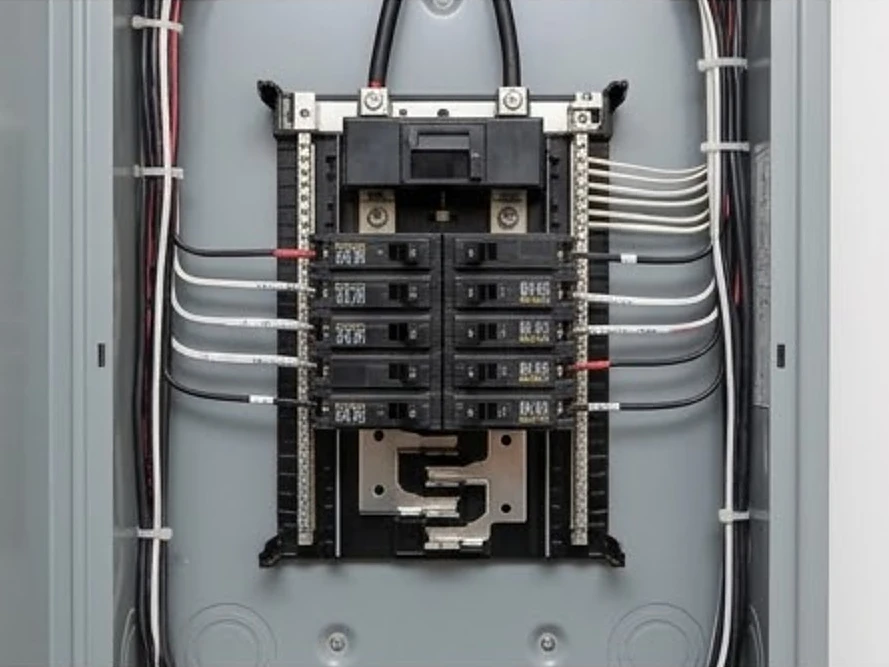
At that age, boilers, roofs and electrical panels are the long-term items in an apartment building. The city also says it is home to Minnesota's largest inflatable sports dome, a reminder that not every commercial structure in town is brick, block or steel.
Commercial buildings we inspect
Quick answers
Do older Robert Street storefronts need a different look than the big-box sites?
They age differently. The city's South Robert Street strategy places the early-1900s Main Street blocks in the North District and describes the area south of Emerson Avenue, developed from the 1960s onward, as commercial franchises and big-box retail. Big-box buildings typically have large flat roofs and rooftop equipment. A commercial property inspection exists to describe the condition of whichever type a buyer is considering.
Why does slope matter for a commercial building in West St. Paul?
The city's comprehensive plan places some of the steepest slope areas in the city south of the Signal Hills shopping center. Water runs downhill, so grading, drains and retaining walls decide whether foundations and lower floors stay dry. Moisture on walls and slabs is the usual evidence of drainage trouble, and thermal imaging can help show damp areas in a building envelope.
Does a building named in a redevelopment plan still need a condition inspection?
Yes. The 2040 plan names the aging Signal Hills retail hub, the Wentworth and Thompson Avenue area and strip-mall sites south of Marie as redevelopment opportunities, but plans take years. An owner or lender holding a building in the meantime needs to know what its roof, structure and systems can carry.
Sources
- City of West St. Paul: 2040 Comprehensive Plan (posted by MN GreenStep Cities)
- City of West St. Paul: A Strategy for South Robert Street's Renaissance (November 2000)
- West St. Paul Reader: Signal Hills archive
- City of West St. Paul: Economic Development
Nearby towns
Commercial property inspection in Minnesota and Iowa · Home inspection in West Saint Paul
Buying, leasing or financing a commercial building in West Saint Paul? Build a free instant quote, or call or text (612) 457-1634.
Get Your Free Instant Quote