
By the Closer Look Inspectors team · Facts checked October 2026 against the sources listed below · About our inspectors
Storefronts, strip centers, small office buildings, and main-street blocks with apartments upstairs put several occupants under shared roofs, walls, and utilities. A commercial inspection documents a building's condition so buyers and owners can plan for the repairs ahead.
Get Your Free Instant QuoteCall or text (612) 457-1634
Retail, office & mixed-use
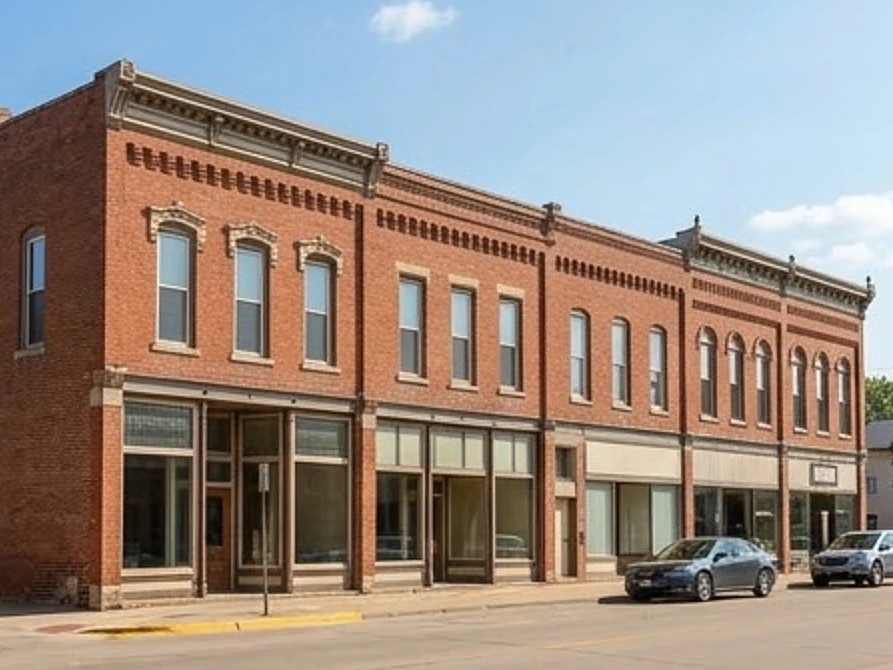
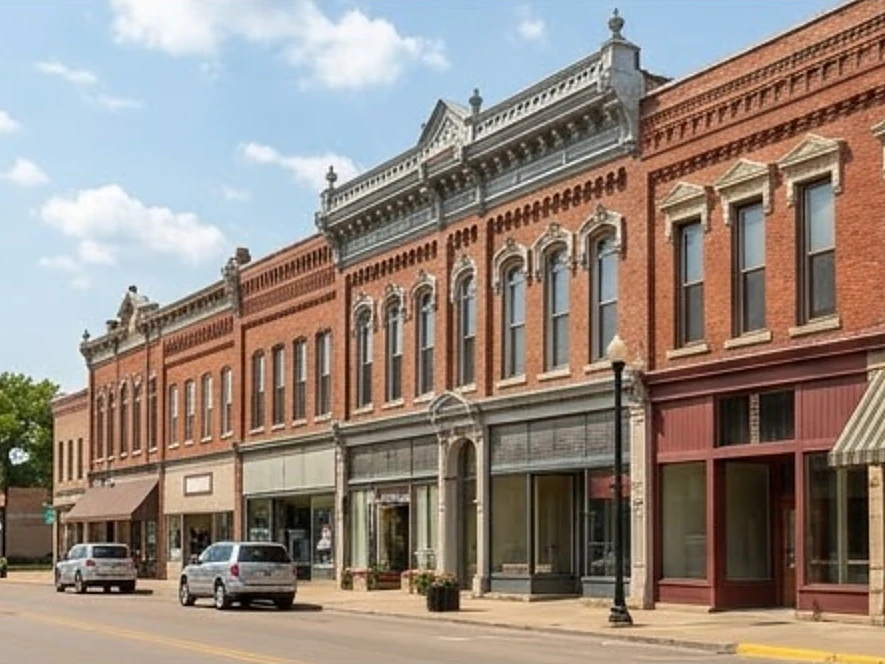
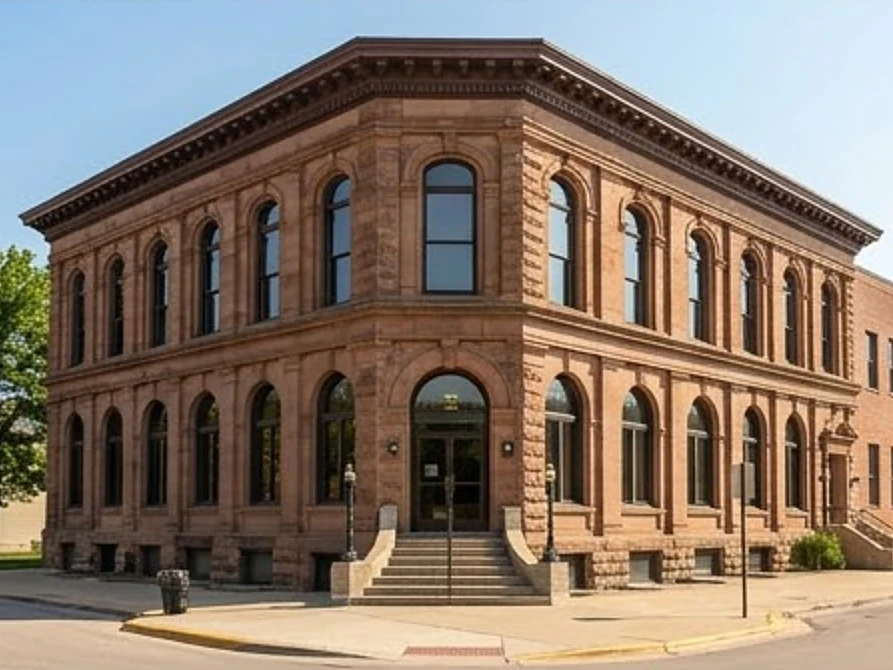
Four building types, one shared structure
Storefronts, strip centers, small office buildings, and main-street blocks with apartments above look different from the street, but they share a structure: several occupants depending on one roof, one set of walls, and often one set of utilities.
Many are small. In the U.S. Energy Information Administration's national survey of commercial buildings (the 2018 Commercial Buildings Energy Consumption Survey), the median office building was 5,000 square feet and 38 years old, and the median retail building outside a mall was 6,000 square feet and 43 years old. Enclosed and strip malls run larger, at a median of 13,000 square feet, and younger, at 30 years. Retail buildings are open 55 hours a week at the median, offices 45.
In the same 2018 survey, the median commercial building of any type in the West North Central division, which includes Minnesota and Iowa, was 34 years old.
ASTM's baseline guide for property condition assessments gives separate annex guidance for office buildings and for retail buildings, alongside multifamily properties.
Roofs: the shared asset
A roof, as the National Park Service puts it, "sheds the rain, shades from the sun, and buffers the weather." On a strip center or a row of attached storefronts, one roof does that for every tenant, so a leak at one end can reach a tenant at the other. The Park Service adds that a poor roof speeds the deterioration of historic building materials.
Flat and low-slope roofs can hide trouble. The Department of Energy's maintenance guide says people "generally forget about the roof until it leaks," and that moisture from a roof membrane that has lost its integrity can be detected as differences in the roof's thermal profile. Commercial thermal imaging is covered on its own page.
Storefronts and older masonry
On many historic commercial buildings, the storefront is the most important architectural feature, according to the National Park Service, and the feature most commonly altered. The Park Service cautions that money spent on storefront work "may be completely wasted if repair and maintenance problems on the rest of the building are neglected."
Brick blocks add their own wear. Masonry, the Park Service notes, is subject to deterioration, especially at the mortar joints, and uncontrolled moisture is the most prevalent cause of deterioration in older and historic buildings. The Park Service also notes that well-maintained properties tend to suffer less damage from storms, high winds, and even small earthquakes.
Depth depends on the building
ASTM's baseline guide says not every property warrants the same level of assessment. It says the right level is guided by the purpose of the assessment, the type of property, the age of the improvements, the user's expertise and risk tolerance, and the time available, which is why a corner storefront and a multi-tenant strip center can call for different depth.
Apartments above the shop
Many main-street buildings pair ground-floor commercial space with apartments above, and the apartment count is worth knowing: Fannie Mae's and Freddie Mac's multifamily guides both start at five dwelling units.
Who carries the roof: the leases decide
In a multi-tenant building, repair responsibility follows the leases. Cornell's Legal Information Institute explains that under a gross lease the landlord pays the operating and maintenance expenses and the tenant pays one all-inclusive rent, while under a triple net lease the tenant pays rent plus property taxes, insurance, and common-area maintenance charges, and sometimes utilities or repairs. For a buyer, the lease wording decides who pays for a roof repair, and the roof's condition decides how soon the question comes up.
Talk through a specific building
Closer Look Inspectors provides commercial property inspections for retail, office, and mixed-use buildings in Minnesota and Iowa. Describe the building and request a quote.
Related
Towns we cover
Quick answers
What makes a mixed-use building different from a standalone office building?
Two kinds of occupants share one structure, and the roof, walls, and often utilities serve both. A problem on one side can reach the other.
Who pays for roof repairs in a multi-tenant building?
The leases decide. Under a gross lease the landlord pays the operating and maintenance expenses and the tenant pays one all-inclusive rent; under a net lease the tenant pays base rent plus some or all of the property's operating and maintenance expenses. Read the roof language before signing.
How big and how old are typical retail and office buildings?
In EIA's 2018 national survey, the median office building was 5,000 square feet and 38 years old, and the median retail building outside a mall was 6,000 square feet and 43 years old.
Why do older main-street buildings need extra attention to moisture?
The National Park Service calls uncontrolled moisture the most prevalent cause of deterioration in older and historic buildings and notes that masonry is subject to deterioration, especially at the mortar joints.
Sources
- U.S. Energy Information Administration: 2018 CBECS Table B2, Summary table: total and medians of floorspace, number of workers, and hours of operation
- U.S. Energy Information Administration: CBECS terminology
- ASTM International: Standard Guide for Property Condition Assessments: Baseline Property Condition Assessment Process (current edition)
- National Park Service: Preservation Brief 4, Roofing for Historic Buildings
- U.S. Department of Energy (PNNL): Operations & Maintenance: A Guide to Achieving Operational Efficiency, Release 3.0 (August 2010), Chapter 6, Predictive Maintenance Technologies
- National Park Service: Preservation Brief 11, Rehabilitating Historic Storefronts
- National Park Service: Preservation Brief 2, Repointing Mortar Joints in Historic Masonry Buildings
- National Park Service: Preservation Brief 39, Controlling Unwanted Moisture in Historic Buildings
- National Park Service: Preservation Brief 47, Maintaining the Exteriors of Small and Medium Size Historic Buildings
- Fannie Mae Multifamily Guide: Part II, Chapter 1, Eligible Properties
- Freddie Mac Multifamily Seller/Servicer Guide: Glossary
- Cornell Law School Legal Information Institute: Net lease (Wex)
Looking at retail, office & mixed-use? Build a free instant quote, or call or text (612) 457-1634.
Get Your Free Instant Quote