
By the Closer Look Inspectors team · Facts checked October 2026 against the sources listed below · About our inspectors
A commercial property inspection helps an Albert Lea buyer, owner or lender learn how an old brick block or a newer plant has held up. Broadway's historic district, on the National Register since 1987, has significant buildings from 1874 to 1928, and heavy rain in June 2024 pushed the city's wastewater plant to 18 to 20 million gallons a day.
Get Your Free Instant QuoteCall or text (612) 457-1634
Commercial buildings in and around Albert Lea

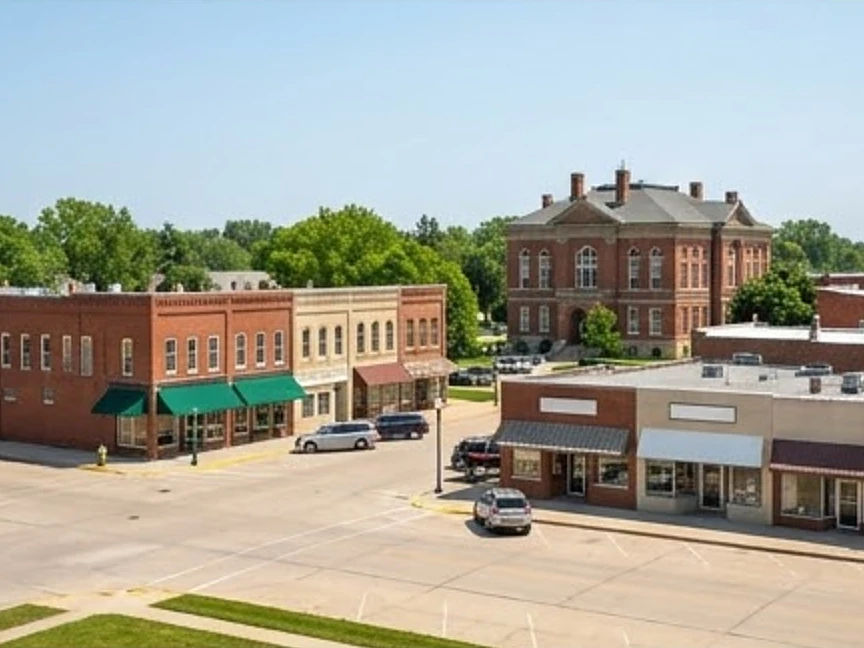
Broadway's brick storefronts, 1874 to 1928
The 1987 National Register nomination calls the Albert Lea Commercial Historic District a large and intact concentration of late nineteenth and early twentieth century commercial structures in southern Minnesota. It covers a little over three blocks of Broadway, and the form counts 48 buildings, saying its significant buildings were constructed between 1874 and 1928.
The nomination describes the buildings as predominantly two stories tall, with several of three, and says most have red brick facades with rusticated sandstone or molded stone trim. It says the district had no vacant lots, with solid storefronts along the sidewalks. In a continuous row like that, a neighbor's roof, wiring or fire history can affect your building, so condition questions do not stop at a property line.
The nomination says virtually all buildings had storefront alterations at street level, while in general the buildings were in remarkably original condition above the first story, although several contributing buildings were missing elaborate metal cornices and parapets or had window changes. Altered ground floors under original upper walls, and missing cornices and parapets, are where problems tend to start.
Fire shaped this street. The nomination says fires, rather than urban renewal, shaped much of Broadway's present appearance, and nine businesses were destroyed or damaged on the east side of Broadway south of East William Street in the spring of 1922. It also says wooden structures along Broadway were already being replaced by brick as early as 1874. A later amended nomination extended the period of significance to 1953 (MNopedia dates the expansion to 2004) and counts 91 contributing buildings.
A rail and interstate crossroads
The 1987 nomination says four of Albert Lea's five railroads once had division quarters in the city, with lines radiating out in ten directions. A November 2019 interim summary prepared for the Albert Lea Economic Development Agency's strategic planning places the city at the crossroads of I-35 and I-90, names five industrial parks among available land sites, and counts 18 buildings listed, the largest almost 350,000 square feet. It names Mayo Clinic, AL Select Foods, Minnesota Corrugated Box and Interstate Packaging among the largest employers in the Freeborn County metro area.
Food, packaging and health care buildings are a different kind of building from a Broadway storefront. They tend to have large roofs, process refrigeration or heating equipment and heavy electrical service. Infrared cameras suit that equipment because a failing part usually runs hotter or colder than it should before it quits.
Lakes, heavy rain and the sewer system
The 1987 nomination bounds the district on the north by parking lots south of Fountain Lake. In June 2024 the city reported that flood waters could take days to recede as stormwater drains through the local chain of lakes.
That same week the city's wastewater plant, which averages 4 million gallons a day, processed 18 to 20 million gallons a day after more than 3 inches of rain in 48 hours. The city attributed the extra flow to stormwater from residential sump pumps and groundwater seeping into sewer lines. For a commercial building, basements, floor drains and roof drainage are where a wet year shows up first.
Commercial buildings we inspect
Quick answers
How old are the buildings in downtown Albert Lea's historic district?
The 1987 nomination counted 48 buildings and says its significant buildings were constructed between 1874 and 1928; a later amended nomination extended the period of significance to 1953. The 1987 nomination says most have red brick facades with stone trim and that virtually all had altered storefronts at street level.
Why do shared walls matter when buying a downtown Albert Lea storefront?
The 1987 nomination says the district had no vacant lots and that storefronts ran solid along the sidewalks, and it records a 1922 fire that destroyed or damaged nine businesses on one side of Broadway. In a continuous row, a neighbor's roof, wiring or fire history can affect your building.
Does heavy rain affect commercial buildings in Albert Lea?
In June 2024 the city said its wastewater plant handled 18 to 20 million gallons a day against an average of 4 million, after more than 3 inches of rain in 48 hours, with stormwater and groundwater entering sewer lines. Basements, floor drains and roof drainage are the building-side questions a wet year raises.
Sources
- National Park Service (NPGallery): National Register Nomination, Albert Lea Commercial Historic District (1987)
- Minnesota Historical Society (MNopedia): Albert Lea Commercial Historic District
- City of Albert Lea: Wastewater spill contained, long-term repairs underway (June 24, 2024)
- National Park Service form: Albert Lea Commercial Historic District (amended), hosted by Minnesota Pollution Control Agency GreenStep Cities
- Albert Lea Economic Development Agency: Joint Vision and Economic Development Strategic Plan, Interim Summary (2019)
Nearby towns
Commercial property inspection in Minnesota and Iowa · Home inspection in Albert Lea
Buying, leasing or financing a commercial building in Albert Lea? Build a free instant quote, or call or text (612) 457-1634.
Get Your Free Instant Quote