
By the Closer Look Inspectors team · Facts checked October 2026 against the sources listed below · About our inspectors
Belle Plaine buyers, owners and lenders use a commercial property inspection to learn how a building has aged and where water can reach it. Downtown dates to the late 1800s and was partly rebuilt after a 2005 fire, and regional planners list floodplain as 16 percent of the city’s existing land use.
Get Your Free Instant QuoteCall or text (612) 457-1634
Commercial buildings in and around Belle Plaine
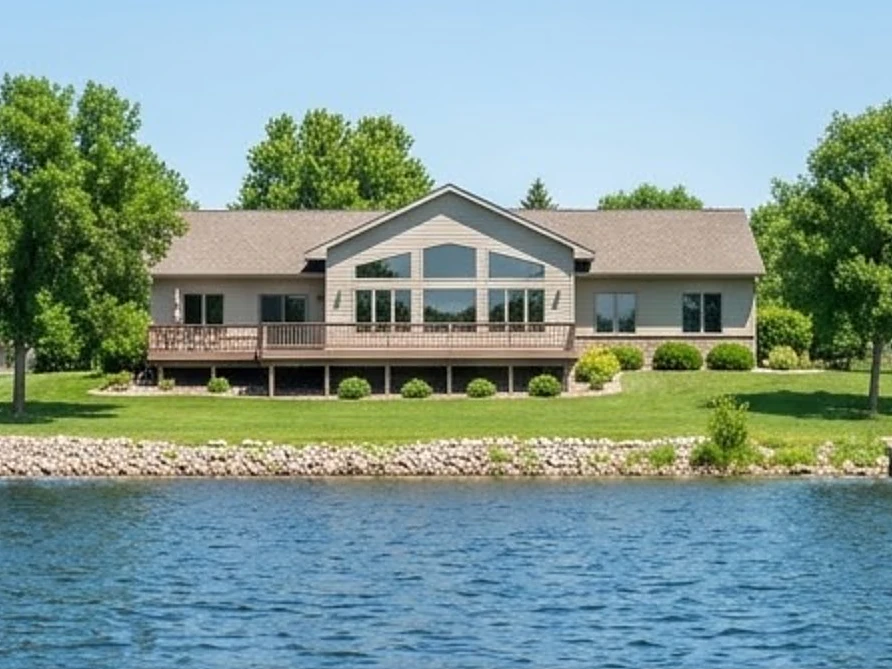
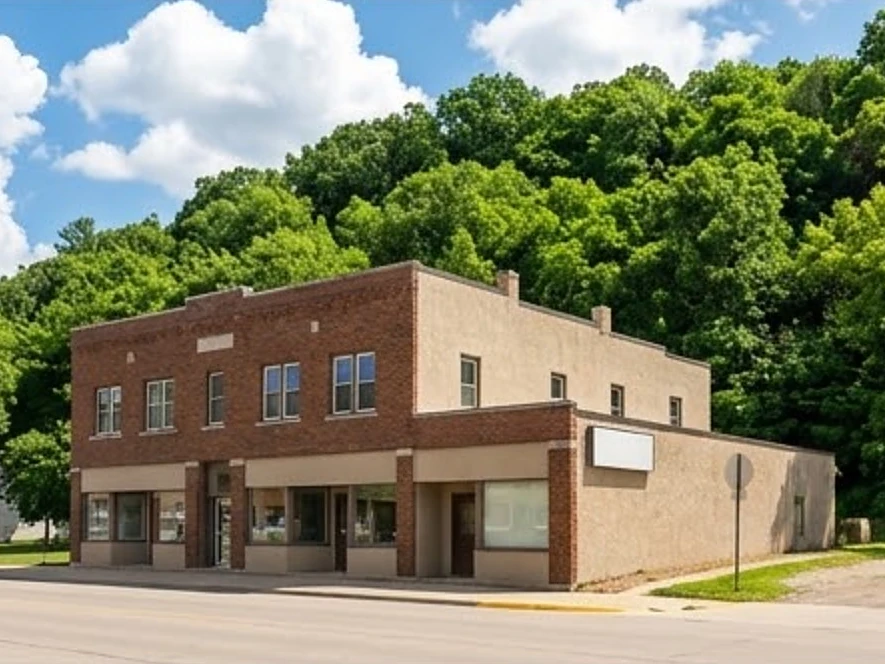
Late-1800s downtown blocks, partly rebuilt after a 2005 fire
The Scott County Historical Society says downtown Belle Plaine has been around since the late 1800s and has continued to change and develop. Many historic buildings, local businesses and restaurants share the downtown today. In 2005 an apartment building caught fire. The fire spread and burned roughly five buildings to the ground, and the buildings were rebuilt and murals were put up.
A block with that history mixes construction eras. Older masonry can stand beside newer framing, and the seams where roofs, walls, flashing and utilities meet are common places for moisture to find a way in. Which parts of a building are original, which were replaced and how each has held up is the kind of question a commercial property inspection is meant to answer.
The Minnesota River and the city’s floodplain
An 1878-79 state business directory described Belle Plaine as an enterprising and growing village of 800 population, situated on the St. P. & S. C. R. R. It listed a flour mill and a stave factory driven by steam, and noted that the Minnesota River, on which the village stands, did not furnish water power.
The Metropolitan Council’s report on the city’s 2040 plan lists low-density residential as the predominant existing land use at 44 percent, followed by floodplain at 16 percent. A preliminary FEMA flood insurance study for Scott County, which includes Belle Plaine, says low-lying areas adjacent to the Minnesota River are subject to periodic flooding and that the flood of record occurred in April 1965. Elevation and flood history vary lot by lot, so grade, drainage, basements and ground-floor equipment are the practical questions for a commercial building near low ground.
The same report notes a Class I freight rail facility operated by Union Pacific in the city. The Council’s 2008 report describes Trunk Highway 169 as the only principal arterial in Belle Plaine, a four-lane expressway that runs diagonally through the city. Commercial buildings near rail and highway corridors are often shops, warehouses and service buildings with large roofs, loading areas and heavy electrical service.
An 1869 frame church and the city’s reuse plans
The Metropolitan Council’s report says the city’s plan acknowledges two properties listed on the National Register of Historic Places and that the city will pursue economic development opportunities involving adaptive reuse of historically important buildings. A 1979 National Register nomination for the Episcopal Church of the Transfiguration describes a small white clapboard frame church constructed in 1869.
Wood-frame churches and halls of that age, and older commercial buildings adapted to a new use, raise familiar questions: how the roof and foundation have held up, where moisture has been entering, and whether the electrical and heating systems suit the new purpose. A commercial inspection before a purchase or a change of use is meant to answer them.
Commercial buildings we inspect
Quick answers
Is downtown Belle Plaine in a flood area?
The Metropolitan Council’s report on the city’s plan lists floodplain as 16 percent of existing land use, and a preliminary FEMA flood insurance study for Scott County says low-lying areas next to the Minnesota River are subject to periodic flooding. Whether one building is affected depends on its own site and elevation, so drainage and ground-floor equipment are worth understanding before a purchase.
Why does the 2005 downtown fire matter to a buyer today?
The Scott County Historical Society says the fire burned roughly five buildings, which were then rebuilt. Rebuilt and original sections can sit side by side with different roofs, walls and mechanical systems, so a buyer or lender benefits from knowing the age and condition of each part rather than assuming one building matches the next.
Are churches and community buildings part of commercial property work?
Yes. Churches, halls and other community buildings are part of commercial property work, and the same questions apply. A clapboard frame church such as the 1869 Episcopal Church of the Transfiguration shows why roof, foundation and moisture history deserve attention in a building that old.
Sources
- Scott County Historical Society: Yesterday and Today in Belle Plaine
- MN Bricks: Belle Plaine city history (text of the Minnesota State Gazetteer and Business Directory, 1878-79)
- Metropolitan Council: Committee Report on the City of Belle Plaine 2040 Comprehensive Plan (Business Item 2019-219 JT)
- FEMA: Flood Insurance Study, Scott County, Minnesota and Incorporated Areas (revised preliminary, July 13, 2018)
- Metropolitan Council: Advisory Information on the City of Belle Plaine 2030 Comprehensive Plan Update (Item 2008-242)
- National Park Service: National Register Nomination, Episcopal Church of the Transfiguration, Belle Plaine
Nearby towns
Commercial property inspection in Minnesota and Iowa · Home inspection in Belle Plaine
Buying, leasing or financing a commercial building in Belle Plaine? Build a free instant quote, or call or text (612) 457-1634.
Get Your Free Instant Quote