
By the Closer Look Inspectors team · Facts checked October 2026 against the sources listed below · About our inspectors
A commercial property inspection helps a Chaska buyer, owner or lender learn how an older brick storefront or a newer warehouse building is holding up. Second Street was where Chaska's commercial growth came in the 1870s, a river levee finished in 1996 shapes the drainage question, and a warehouse-and-office park was started at Highway 212 in 2021.
Get Your Free Instant QuoteCall or text (612) 457-1634
Commercial buildings in and around Chaska

Chaska brick and the Second Street storefronts
The Carver County Historical Society says the Chaska brick industry flourished from 1857 to 1950, and that by the start of the twentieth century thirty percent of all brick used in Minnesota was made in Chaska. The last brickyard closed in 1971.
A 1978 state historic inventory form for the Walnut Street Historic District says all commercial buildings in the district are on Second Street, where Chaska's commercial growth came in the 1870s. It describes those storefronts as abutting the sidewalk, predominantly brick and two stories tall. A separate 1978 inventory form places the Simons Block and its livery barn at the eastern end of Chaska's business district and says Anton Simons built the east part of the block and the livery barn in 1888.
The details are what a buyer should care about. The city's 2003 preservation design manual explains that the decoration is, more often than not, made by the way the bricks are placed, forming corbels and projections over windows, and that cast-iron stars serve as tie-rod ends holding brick together on some buildings. Corbels, cornices, window hoods and tie-rod ends are the places where water and freezing do slow damage, and they are hard to judge from the sidewalk.
Historically, the upper floors of buildings like these were living space. The same manual says the upper stories served as the shopkeeper's apartment or were rented as apartments, and it points out how many buildings have an exterior stair from the upper story, often with a wood porch at the side or rear. Shops below and living space above share walls, roofs and often utilities, so a problem in one can show up in the other.
A downtown behind a river levee
A March 2011 city bulletin says the city completed its flood control project in 1996: a levee and flood control system with diversion channels, gates and lift stations, relief wells, seepage berms and a river gauge. It was built so Chaska would be protected up to a 500-year flood event. The same bulletin calls the 1965 flood, at 34.25 feet, the worst on record for Chaska.
A levee answers the river question, not every water question. Roof drainage, storm sewers, basements and floor drains remain the building's own business, and they are common sources of wet-building problems in any town.
Warehouse and office buildings on Highway 212
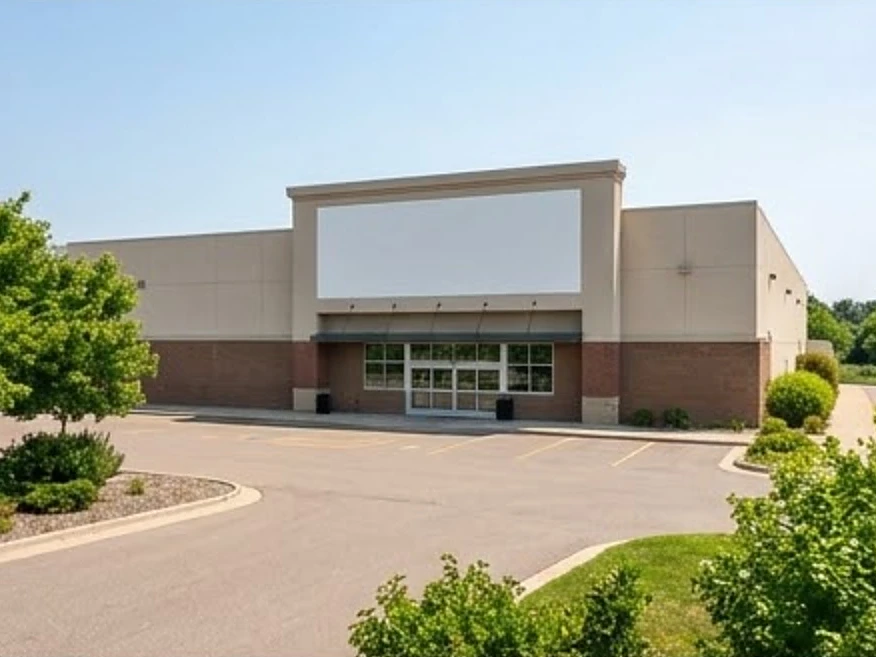
Newer commercial construction includes the Chaska Creek Industrial Park, on the southwest corner of Engler Boulevard and Highway 212. In October 2021 the Chaska Herald reported that construction had begun there, with two buildings planned at 168,000 and 133,000 square feet.
Buildings of that size usually have large low-slope roofs, rooftop units and heavy electrical service. Those are the parts an owner or lender ends up asking about years after the ribbon-cutting.
Commercial buildings we inspect
Quick answers
Does the Chaska levee mean a downtown building cannot flood?
Not exactly. A March 2011 city bulletin says the system was built so Chaska would be protected up to a 500-year flood event, and that the worst flood on record, in 1965, reached 34.25 feet. That speaks to river water. Roofs, drains, basements and storm sewers are separate questions that belong to each building.
What makes older brick buildings in Chaska different from other small-town main streets?
Chaska's downtown manual says locally made Chaska brick and cast iron from Chaska's Ess Foundry are used in simple, decorative patterns, with corbels and projections formed by the way the bricks are placed, and that cast-iron stars serve as tie-rod ends on some buildings. Exposed brick details like these take the weather directly, so they deserve attention when an older storefront changes hands.
Why does thermal imaging come up for newer buildings like those at Chaska Creek?
Thermal imaging shows surface temperature differences. On a large low-slope roof, wet insulation holds heat differently than dry insulation, and in an electrical room a loose connection often runs warmer than the ones around it. A 2021 Chaska Herald report described two buildings of 168,000 and 133,000 square feet at Chaska Creek, so there is a lot of roof and a lot of electrical equipment.
Sources
- National Park Service (NPGallery): Minnesota Historic Properties Inventory Form (1978), Walnut Street Historic District, Chaska
- National Park Service (NPGallery): Minnesota Historic Properties Inventory Form (1978), Simons Block and Livery Barn, Chaska
- Carver County Historical Society: Chaska Brick
- City of Chaska: Preservation Design Manual, Brief Overview of Chaska's Business District (2003)
- City of Chaska: City Hall Bulletin, March 3, 2011 (flood control project)
- Chaska Herald: Chaska industrial park begins construction (Oct. 28, 2021)
Nearby towns
Commercial property inspection in Minnesota and Iowa · Home inspection in Chaska
Buying, leasing or financing a commercial building in Chaska? Build a free instant quote, or call or text (612) 457-1634.
Get Your Free Instant Quote